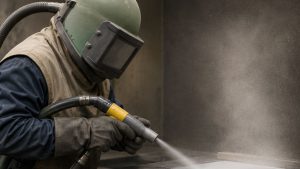
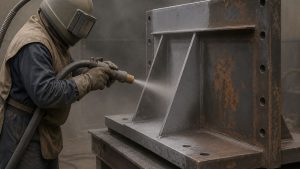
Sandblasting, also called abrasive blasting, is a surface preparation process that uses compressed air or specialized blasting equipment to propel abrasive media against a surface at high speed. It removes rust, paint, corrosion, dirt, and coatings from materials like metal, wood, concrete, and glass to prepare them for refinishing or restoration.
This guide explains how sandblasting works, common blasting media, safety risks, project costs, and when professional sandblasting services are recommended.
What Is Sandblasting?
Sandblasting, also called abrasive blasting, is the controlled propulsion of solid particles at high speed using compressed air or a centrifugal wheel. This process removes paint, corrosion, and scale, or roughens smooth surfaces to improve coating, paint, or adhesive bonding.
Earlier methods relied on silica sand, which produced harmful dust that caused lung damage. Modern abrasive blasting often uses safer media such as crushed glass, baking soda, stainless steel shot, or other materials chosen for the surface and finish. These common abrasives deliver cleaner results with less dust and improved occupational safety. In short, sandblasting efficiently transforms dull or damaged materials into smooth, paint-ready surfaces.
How Does a Sandblaster Work?
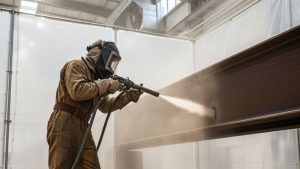
A sandblaster works by using compressed air to propel abrasive media through a hose and nozzle at high pressure. The system includes an air compressor that generates 90–120 PSI of pressure. A blast pot or tank holds and controls the flow of abrasive material. The nozzle directs the stream onto the target surface with precision. For larger projects, a blast cabinet or blast room contains and recycles the media while a dust collector removes airborne particles.
When the abrasive media strikes the surface, it removes unwanted paint, coatings, and oxidation. Operators can adjust air pressure, nozzle distance, and media type to fine-tune the blasting process. These adjustments allow for gentle cleaning or more aggressive material removal based on the surface requirements.
How to Sandblast: Step-by-Step Guide
- Inspect the Surface – Determine what you’re cleaning (metal, wood, or glass) and choose the proper abrasive material.
- Prepare the Area – Mask or tape areas you don’t want blasted.
- Load the Media – Fill the blast pot with the chosen blasting material (e.g., glass beads, steel grit, copper slag).
- Set the Pressure – Start low (30–50 PSI for wood, 90–110 PSI for metal).
- Maintain Motion – Keep the nozzle 8–12 inches from the surface, moving steadily to prevent gouging.
- Clean and Inspect – After blasting, sweep or vacuum loose particles and wipe down the surface.
How to Operate a Sandblaster Safely
Operating a sandblaster takes steady focus and proper safety gear. Always wear gloves, eye protection, earplugs, and a respirator or helmet rated for occupational safety. Work in a well-ventilated area or use enclosed blast rooms to control dust. Before each job, check the hose and nozzle for wear and maintain even, steady movements to avoid uneven results. Beginners should start with lower pressure and softer abrasives such as baking soda or crushed glass. Professionals often rely on automated blast cabinets for small components and larger blast rooms for big industrial projects.
Types of Sandblasting Techniques
| Method | Description | Best Used For | Advantages |
| Dry Blasting | Uses only pressurized air and abrasive media. | Heavy corrosion removal, large steel structures. | Fast results, adaptable pressure. |
| Wet Blasting | Combines water with abrasive media to reduce dust. | Stone restoration, delicate surfaces. | Creates less dust, prevents heat buildup. |
| Vapor Blasting | Adds water mist for ultra-fine finishes. | Automotive parts, molds. | Gentle, smooth finish. |
| Bead Blasting | Propels fine glass beads at high speed. | Polishing metal, stainless steel, and aluminum. | Creates a satin finish, with no material loss. |
| Dry Ice Blasting | Uses dry ice pellets; sublimates on impact. | Food processing or electrical equipment. | Leaves no abrasive residue and may reduce cleanup needs |
| Vacuum Blasting | Collects debris as it cleans. | Indoor work areas. | Dust-free, reusable media. |
What Is Dustless Sandblasting?
Dustless sandblasting, also known as wet sandblasting, combines water with abrasive media to capture airborne particles during blasting. This method greatly reduces dust and keeps surfaces cooler, helping prevent heat-related distortion on thinner materials.
It’s a preferred option for automotive paint removal, boat hull cleaning, and projects in populated areas where dust control is crucial. Using various media such as crushed glass, garnet, or baking soda, dustless sandblasting offers an environmentally friendly and safer alternative to traditional dry methods.
Abrasive Media: The Materials That Make It Work
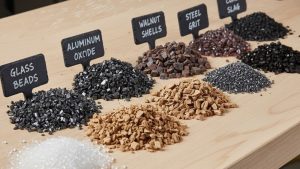
The choice of abrasive material determines the finish, efficiency, and safety level of your project on other surfaces.
| Abrasive Media | Hardness (Mohs) | Common Use | Notes |
| Aluminum Oxide | 8-9 | Rust and paint removal | Reusable many times, fast cutting. |
| Steel Grit / Steel Shot | 7-8 | Heavy-duty metal cleaning | High impact energy for cast iron and steel. |
| Glass Beads | 5-6 | Polishing and satin finishes | Produces a smooth surface without wearing the base material. |
| Crushed Glass | 5-6 | Paint removal / eco-friendly work | Low dust, recycled source. |
| Baking Soda | 2.5 | Delicate surfaces | Gentle cleaning without etching. |
| Copper Slag / Nickel Slag | 6-7 | Industrial corrosion removal | Disposable media for heavy coatings. |
| Silicon Carbide | 9-10 | Hard metals/stone engraving | Extremely hard and fast-cutting. |
| Walnut Shells / Corn Cob | 3-4 | Wood or plastic surfaces | Biodegradable and non-toxic. |
Applications of Sandblasting Across Industries
Sandblasting is a versatile process used across multiple industries for cleaning, restoring, and preparing surfaces. From heavy industrial equipment to delicate architectural details, it delivers consistent, high-quality results that improve both appearance and performance, creating an enhanced final product.
- Industrial Maintenance – Rust and corrosion removal on tanks, pipes, and machinery.
- Construction & Restoration – Cleaning brick, stone, and concrete surfaces.
- Automotive – Stripping paint, smoothing body panels, and prepping metal frames.
- Marine – Removing barnacles and oxidation on ship hulls.
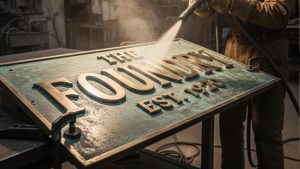
- Creative Work & Sign Making – Etching glass, revealing wood grain, and producing raised-letter signs.
In signage manufacturing, sandblasting brings depth and texture that paint or engraving alone can’t match.
How Much Does Sandblasting Cost?
The cost of sandblasting depends on surface size, material type, abrasive media, containment needs, equipment, and project complexity. Smaller jobs may be priced by square foot, while larger or more complex projects are often priced hourly or by custom quote. Smaller jobs may be priced by square foot, while larger or more complex projects are often priced hourly or by custom quote.
While professional sandblasting may seem costly upfront, it saves significant time and ensures a cleaner, longer-lasting finish. It’s always best to consult a local sandblasting provider who can assess your project, recommend the right approach, and deliver precise, consistent results safely and efficiently.
Who Does Sandblasting Near Me?
When looking for sandblasting services near you, it’s important to choose professionals experienced with your specific material, whether it’s metal, wood, or glass. Make sure they have the right equipment, such as blast cabinets for small projects and blast rooms for larger ones, and that they follow proper occupational safety and dust-control standards.
Ask to see examples of their previous work and confirm that they’re insured. A skilled provider will recommend the best abrasive media for your project and deliver even, high-quality results. CARV offers professional sandblasting services using advanced equipment and eco-friendly materials to ensure every surface is clean, precise, and ready for finishing.
Safety and Health Precautions
Is sandblasting dangerous? It can be if safety protocols are ignored. The process produces noise, dust, and airborne particles that can harm lungs and skin. According to NIOSH’s alert Preventing Silicosis and Deaths from Sandblasting, abrasive blasting with silica-containing sand has a long-recognized potential to cause silicosis and fatal respiratory disease. The alert cites a 1936 British study that found 5.4% of sand-blasters died of silicosis or tuberculosis within a few years.
Safety Checklist:
- Wear a respirator, helmet, gloves, and earplugs.
- Ensure proper ventilation or use a dust collector.
- Avoid using silica sand, which can cause silicosis.
- Follow OSHA and NIOSH standards for exposure limits.
Environmental Considerations
Eco-friendly sandblasting prioritizes sustainability without sacrificing performance. Instead of using harsh or toxic materials, it relies on recycled glass, baking soda, walnut shells, or dry ice as the primary media. These options break down naturally or can be reused multiple times, minimizing waste and environmental contamination. They also generate less heat and dust, making them ideal for sensitive environments or indoor applications where air quality matters.
Modern sandblasting setups often include closed-loop recovery systems that automatically collect and recycle used abrasive media. This process not only reduces operating costs but also prevents harmful particles from entering the air or ground, or nearby waterways. Many professional providers now follow EPA and OSHA safety standards to limit waste generation and ensure responsible disposal practices. By choosing eco-friendly sandblasting, businesses can achieve high-quality surface finishes while supporting cleaner, safer, and more sustainable operations.
Advantages and Disadvantages of Sandblasting
Sandblasting offers fast, uniform results across materials like metal, wood, glass, and plastic. It efficiently removes paint, rust, and debris while improving coating adhesion for a stronger, longer-lasting finish. The process is also cost-effective compared to manual cleaning methods. This makes it ideal for both restoration and preparation work.
However, sandblasting requires specialized equipment and skilled operators to ensure proper technique. If the wrong pressure or abrasive media are used, sandblasting can damage softer surfaces, create uneven texture, or remove more material than intended. Additionally, without proper containment, the process can generate noise and dust, emphasizing the importance of professional handling and controlled environments.
Conclusion
Sandblasting has stood the test of time because it works. It’s fast, adaptable, and capable of turning even the most weather-worn surfaces into clean canvases ready for transformation in most cases. From industrial machinery to intricate signage, this abrasive blasting process continues to define the quality of modern finishing.
At CARV, we use precision sandblasting techniques to prepare, clean, and texture materials for long-lasting, eye-catching results. Whether you’re restoring a metal fixture or commissioning a custom sign, our experienced team ensures every blasted surface is smooth, safe, and built to last. Contact us today to learn how professional sandblasting can elevate your next project.
FAQs
Can You Sandblast Aluminum?
Yes, you can sandblast aluminum, but use soft media and moderate pressure. Aluminum is lightweight and can pit easily. The best results come from aluminum oxide, glass beads, crushed glass, or baking soda at 40–60 PSI. This approach cleans oxidation and leaves a uniform matte finish, perfect for anodizing or painting. Avoid steel grit or copper slag, which are too aggressive and may embed particles in the surface.
Can You Sandblast Cast Iron?
Absolutely. Cast iron responds well to steel shot, steel grit, or aluminum oxide at 90–110 PSI. The process removes corrosion, paint, and surface scale efficiently. After blasting, apply a protective coating to prevent flash rust. Because cast iron is porous, sealing immediately ensures a smoother finished product and longer life.
What is the purpose of sandblasting?
The purpose of sandblasting is to clean, smooth, or texture a surface by removing rust, paint, or other contaminants. It prepares materials like metal, wood, and glass for coating, painting, or restoration, ensuring better adhesion and a longer-lasting finish.
Is sandblasting a hard job?
Sandblasting can be physically demanding because it requires precision, focus, and strict safety measures. However, with the right training, protective equipment, and modern blasting systems, it becomes a manageable and efficient process for skilled operators.