Sandblasted HDU Signs: How They’re Made and Why They Last
Sandblasted HDU signs combine craftsmanship, durability, and visual appeal in one long-lasting sign solution. Businesses choose them for the classic look of carved wood signs without many maintenance concerns tied to wood. These signs create a professional appearance, hold paint well, and perform reliably in outdoor environments.
For sign companies, agencies, and resellers, CARV serves as a wholesale partner for custom sign fabrication. Whether the project is for a retail store, restaurant, office, resort, or park, this guide explains how sandblasted HDU signs are made, why they last, and how they support stronger business signage.
What Are Sandblasted HDU Signs?
Sandblasted HDU signs are dimensional signs made from high-density urethane, often referred to as HDU. During production, fabricators remove material from the sign face using sandblasting and carving techniques. This process creates textured backgrounds and raised elements that give the sign depth and character.
Unlike flat panels, sandblasted signs feature dimensional lettering, logos, artwork, and decorative shapes. The result is a sign that feels handcrafted while maintaining a clean and professional appearance.
Many businesses choose sandblasted HDU signs because they combine elegance, durability, and customization. These signs can match both traditional and modern architectural styles.
What Is HDU in Sign Making?
HDU stands for high-density urethane, a lightweight yet durable sign substrate specifically designed for sign manufacturing. It resembles wood in appearance but offers several advantages over natural materials.
Unlike wood signs, HDU does not absorb moisture. It also resists rot, cracking, insects, and many forms of deterioration that commonly affect exterior signs.
Several manufacturers produce HDU products, with Precision Board being one of the most recognized names in the industry. Precision Board is available in a range of densities, allowing sign makers to select the right material for each project.
Why HDU Is Popular for Custom Signs
Sign professionals often prefer HDU because it allows detailed carving without sacrificing durability.
Benefits of HDU include:
- Lightweight construction
- Excellent paint adhesion
- Consistent surface quality
- Resistance to moisture
- Long-term dimensional stability
As a result, HDU has become a suitable alternative to wood for many custom signs.
What Does Sandblasting Mean for Signs?
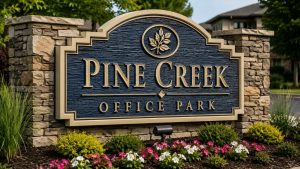
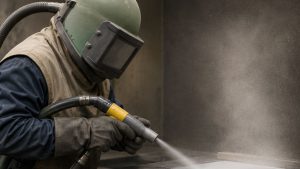
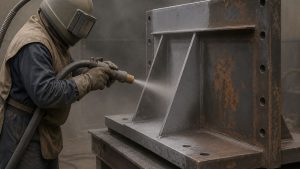
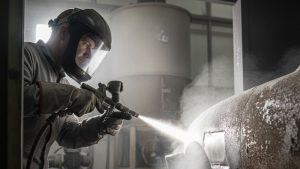
Sandblasting is a carving process that uses compressed air and abrasive materials to remove portions of a sign’s surface. Areas protected by a mask remain untouched while exposed sections become recessed.
This technique creates the textured backgrounds often seen on sandblasted wood signs and sandblasted HDU signs. The contrast between recessed backgrounds and raised elements creates visual interest and depth.
Although sandblasted wood signs remain popular, many businesses now prefer sandblasted HDU because it delivers a similar appearance with less maintenance.
Sandblasting vs Routing
Modern sign fabrication often combines routing and sandblasting. Routing uses CNC equipment to create precise cuts, while sandblasting produces natural textures.
A typical process may include:
| Technique | Purpose |
| CNC Routing | Creates letters, logos, and fine details |
| Sandblasting | Adds texture and depth |
| V Carved Detailing | Produces decorative accents and sharp line work |
Using multiple techniques allows sign makers to create highly customized designs.
How Are Sandblasted HDU Signs Made?
The manufacturing process for sandblasted HDU signs involves several stages. Each step contributes to the final appearance and durability of the sign.
Step 1: Design and Artwork Preparation
Every project begins with a custom design. Clients often submit logos, photos, sketches, or existing artwork for review.
During this phase, designers determine:
- Sign dimensions
- Colors
- Letter styles
- Mounting requirements
- Decorative elements
The goal is to create a complete layout that matches the business brand and installation site.
Step 2: Material Selection
Next, fabricators choose the appropriate HDU substrate. Density selection depends on the sign’s size, complexity, and installation environment.
Precision Board products are commonly used because they provide excellent carving performance and long-term stability.
Choosing the right substrate helps retain crisp details throughout the life of the sign.
Step 3: CNC Routing and Carving
After approval, the sign enters production. CNC equipment begins carving logos, lettering, borders, arrows, and decorative features.
Routing allows fabricators to create detailed artwork that would be difficult to achieve by hand. Complex logos and customized graphics benefit greatly from this technology.
Many projects also incorporate v-carved lettering for additional elegance and visual appeal.
Step 4: Sandblasting the Background
Following routing, the sign undergoes sandblasting. Areas intended for texture are exposed while raised portions remain protected.
The abrasive stream removes material and creates the characteristic texture associated with sandblasted signs.
This stage gives the sign its distinctive handcrafted appearance. It also enhances contrast between the background and raised design elements.
Step 5: Priming and Paint Application
Once carving is complete, technicians prepare the sign for finishing. Primers help seal the surface and promote paint adhesion.
Multiple coats of paint may be applied, depending on the design complexity. Many signs incorporate several colors to highlight logos, lettering, and borders. Quality paint systems help improve weather resistance and maintain appearance over time.
Step 6: Final Assembly and Installation
Before installation, the finished sign undergoes a final review. Fabricators inspect lettering, colors, mounting hardware, and overall quality.
Depending on the project, the sign may be mounted to posts, monument structures, walls, or decorative frames. Professional installation helps maximize durability and ensures the sign performs as intended.
Why Do Businesses Choose HDU Instead of Wood?
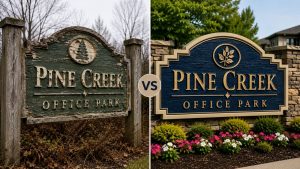
Many business owners compare HDU and wood before investing in a new sign. Both materials can create beautiful dimensional signage. However, HDU offers several advantages that make it a popular choice for long-term business signage.
Traditional wood signs provide natural beauty and rustic charm. Yet wood is susceptible to moisture, insects, cracking, and rot. Over time, those issues can increase maintenance costs and shorten a sign’s lifespan.
By comparison, HDU delivers the appearance of carved wood while eliminating many common concerns associated with natural materials. Because HDU is engineered for signage, it remains stable in a wide range of outdoor environments.
HDU vs Wood Signs
| Feature | HDU Signs | Wood Signs |
| Moisture Resistance | Excellent | Moderate |
| Rot Resistance | Yes | No |
| Insect Resistance | Yes | No |
| Cracking Risk | Very Low | Higher |
| Weight | Lightweight | Heavier |
| Maintenance | Lower | Higher |
| Lifespan | Long-Term | Varies by Species |
| Custom Carving | Excellent | Excellent |
For many businesses, sandblasted HDU signs provide the best balance between appearance, durability, and maintenance requirements.
How Long Do Sandblasted HDU Signs Last?
A professionally manufactured HDU sign can last 10 to 20 years or more when properly maintained. Actual lifespan depends on installation quality, paint systems, climate conditions, and ongoing care.
Unlike sandblasted wood signs, HDU does not absorb water. That advantage helps prevent deterioration caused by moisture exposure. As a result, many sandblasted HDU signs continue looking attractive long after comparable wood signs require significant repairs.
Furthermore, modern coatings help protect the sign from ultraviolet exposure, temperature changes, and daily wear.
Factors That Affect Lifespan
Several factors influence how long a sign will last:
- Quality of the HDU material
- Quality of paint and coatings
- Installation methods
- Sun exposure
- Maintenance schedule
- Local climate conditions
When quality materials and proper fabrication come together, HDU signs often deliver excellent long-term value.
What Makes Sandblasted HDU Signs Durable Outdoors?
Durability is one of the biggest reasons businesses invest in sandblasted HDU signs. Unlike many other products used outdoors, HDU was specifically designed to withstand challenging conditions.
The closed-cell structure of high-density urethane prevents water absorption. Because moisture cannot easily penetrate the material, HDU remains resistant to rot, swelling, and many common forms of damage.
Equally important, HDU does not expand and contract as much as wood. That stability helps preserve carved details and reduces the risk of cracking over time.
Performance in Outdoor Environments
Outdoor signs face constant exposure to:
- Sunlight
- Rain
- Humidity
- Wind
- Temperature fluctuations
Fortunately, sandblasted HDU signs are suitable for these conditions. Their durable construction allows them to retain their appearance while reducing the need for extensive repairs.
Are Sandblasted HDU Signs Good for Coastal Areas?
Coastal businesses often face unique challenges. Salt air, humidity, and intense sunlight can accelerate wear on many sign materials.
Fortunately, sandblasted HDU performs exceptionally well in coastal environments. Since the material does not absorb moisture, it avoids many issues commonly associated with sandblasted wood.
For businesses near marinas, beaches, resorts, and waterfront properties, HDU offers a weather-resistant solution that combines elegance with long-term durability.
Why Coastal Businesses Choose HDU
Many coastal business owners select HDU because it is:
- Resistant to moisture
- Less susceptible to rot
- Suitable for humid climates
- Lightweight and easy to install
- Capable of holding intricate carving details
These advantages help businesses maintain an attractive appearance despite harsh weather conditions.
How Much Maintenance Do HDU Signs Require?
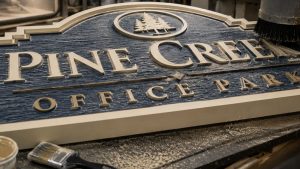
One reason sandblasted HDU signs remain popular is their relatively low maintenance requirements. While no exterior sign is completely maintenance-free, HDU generally requires less attention than wood.
Routine cleaning helps remove dirt, pollen, and environmental buildup. Periodic inspections can also identify minor issues before they become larger problems.
Over time, some signs may benefit from repainting to refresh colors and maintain appearance. However, repainting schedules often occur less frequently than with traditional wood signs.
Simple Maintenance Tips
To help extend the sign’s life:
- Clean the sign periodically
- Inspect mounting hardware
- Touch up damaged paint promptly
- Trim nearby vegetation
- Schedule professional reviews when needed
Regular maintenance helps protect both the appearance and durability of the sign.
Where Are Sandblasted HDU Signs Commonly Used?
Sandblasted HDU signs work well for businesses and properties that need a custom, dimensional look. They are common for business entrances, resorts, office parks, churches, schools, golf courses, community entrances, nature trails, and park signage.
Many organizations also use sandblasted signs for monument signs and wayfinding systems. Raised logos, carved lettering, arrows, and textured backgrounds help create a polished look while making the sign easier to notice.
What Affects the Cost of a Sandblasted HDU Sign?
Several factors influence project pricing. Every sign is customized, so costs vary based on design requirements and fabrication complexity.
Simple projects typically require fewer production hours. More detailed signs with extensive carving, multiple colors, and unique shapes generally require additional labor.
Common Cost Factors
| Factor | Impact on Price |
| Sign Size | Larger signs require more material |
| Carving Depth | Deeper carving increases production time |
| Artwork Complexity | Detailed logos require additional routing |
| Number of Colors | More paint applications increase labor costs |
| Installation Requirements | Complex installations increase costs |
| Double-Sided Construction | Requires additional fabrication |
Businesses should focus on long-term value rather than initial price alone. A durable sign often delivers better return on investment throughout its lifespan.
Conclusion
Sandblasted HDU signs give businesses the classic look of carved wood with better resistance to moisture, rot, cracking, and daily outdoor exposure. With the right design, materials, paint, and installation, they create a durable dimensional sign that supports visibility, brand identity, and a lasting impression.
For sign companies, agencies, and resellers that need dependable fabrication support, CARV can serve as a wholesale partner for custom sandblasted HDU signs. Contact CARV to discuss your next project and request custom sign fabrication support.
FAQs
Are HDU signs better than wood signs?
Many businesses prefer HDU because it resists moisture, rot, insects, and cracking. However, both materials can produce beautiful signs when properly fabricated.
Can HDU signs include custom logos and artwork?
Yes. HDU supports detailed carving, customized logos, intricate artwork, and decorative elements. This flexibility makes it ideal for custom signs.
Are sandblasted HDU signs suitable for harsh weather conditions?
Yes. HDU performs well in many outdoor environments and remains resistant to moisture-related damage. This makes it suitable for many regions and climates.
What is Precision Board?
Precision Board is a widely used HDU product. Many sign manufacturers use it because of its consistency, carving quality, and durability.