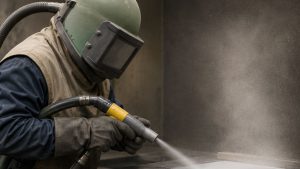
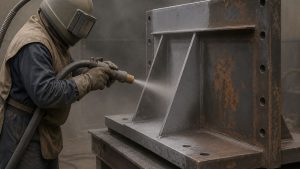
If you’ve ever wondered how professionals clean and prepare metal surfaces, remove rust, or get rid of old paint quickly and effectively, the answer lies in sand blasting. Sandblasting, also known as abrasive blasting, is a powerful cleaning method that uses high-pressure air to propel abrasive materials, such as sand, steel grit, or glass beads, at a surface. This process effectively cleans and prepares surfaces for finishing by removing contaminants, rust, or old paint.
But how does a sandblaster work? The process uses compressed air to propel abrasive blasting media at high velocity toward a surface, effectively removing contaminants or coatings like rust and paint. In this article, we’ll explore the mechanics behind sandblasting and break down the different types of sandblasters. We’ll also discuss how you can use each type to tackle your cleaning and surface preparation projects effectively.
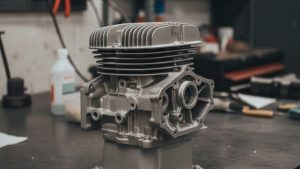
What is Sandblasting?
Sandblasting is a cleaning and surface preparation technique that uses compressed air to forcibly propel abrasive materials at high speeds to clean, polish, or etch surfaces. Commonly used in industrial and commercial settings, sandblasting is essential for tasks like removing rust from metal, stripping old paint, and preparing surfaces for coatings.
The term “sandblasting” is often used interchangeably with “abrasive blasting.” While sand was historically the primary abrasive material, modern sandblasting employs a variety of materials depending on the job at hand. The materials include glass beads, soda, steel shot, and walnut shells. Each blasting material offers unique characteristics and is chosen for its suitability to the specific application and surface being treated, such as in a blast cabinet. These materials are carefully selected based on their abrasiveness and the type of surface being treated.
The Science Behind Blasting (also called abrasive blasting)
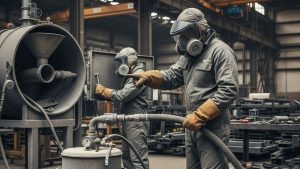
To understand how a sandblaster works, it’s essential to know how the abrasive blasting process is executed. Sandblasting relies on compressed air to propel abrasive media at high speeds. The sandblasting system consists of four components:
- Air Compressor: The air compressor generates the pressurized air required to propel the blasting media.
- Blast Pot: This container holds the abrasive material and ensures it is delivered to the blasting nozzle.
- Blast Hose: The hose carries both the compressed air and abrasive material to the sandblasting nozzle.
- Nozzle: The nozzle directs the flow of abrasive media at the target surface.
When activated, the pressurized air forces the abrasive material out of the nozzle at high velocity, impacting the surface. The abrasive material removes contaminants, paint, rust, or other unwanted material, leaving the surface clean and prepped for painting or coating.
Types of Sandblasters
There are several types of sandblasters, each suited for different applications, including the shot blasting technique. The primary types include gravity-fed, pressure, and siphon sandblasters.
Gravity-Fed Sandblasters
A gravity-fed sandblaster is a basic and cost-effective tool where abrasive media is fed into the system by gravity from a hopper at the top of the gun. When the trigger is pulled, the sand flows down the barrel and out through the nozzle. This type is ideal for light-duty applications, such as rust removal from small metal surfaces or cleaning parts for automotive restoration. However, it is less efficient for larger tasks or tougher materials compared to other models.
Pressure Sandblasters
Pressure sandblasters store abrasive media in a pressurized tank, delivering it through a specialized hose to the nozzle. These systems, including wet blasting options, are highly efficient and ideal for large-scale industrial or commercial projects. offering faster cleaning speeds. However, they are more expensive and less environmentally friendly, as the abrasive cannot be reused. Pressure sandblasters are perfect for cleaning large metal surfaces, removing layers of paint from construction equipment, or rust removal from industrial machinery.
Siphon Sandblasters
The siphon sandblaster is commonly used for medium to large-scale projects and operates by using suction to pull abrasive material from a reservoir. When the air compressor activates, it creates a vacuum in the siphon tube, drawing sand into the nozzle. This model is affordable, versatile, and suitable for continuous use with reusable abrasive media. However, it is slightly less powerful than pressure sandblasters, making it less ideal for tougher jobs. Siphon sandblasters are perfect for cleaning and rust removal on larger metal surfaces, automotive restoration, or cleaning large equipment.
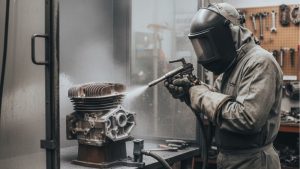
How to Choose the Right Sandblaster for Your Needs
Choosing the right sandblaster depends on several factors, including the size of the blast room.
Type of Surface
When selecting a sandblaster, consider the material you’ll be working with. Metal surfaces often require highly abrasive materials like silica sand or steel grit for rust and paint removal. Meanwhile, glass surfaces benefit from gentler abrasives like glass beads to avoid damage and achieve a polished finish.
Scale of the Project
The size of your project plays a crucial role in determining the right sandblaster. For large-scale, industrial tasks like cleaning heavy machinery or removing thick paint from metal structures, a pressure sandblaster is the best choice due to its high efficiency and fast results. Meanwhile, gravity-fed or siphon sandblasters are more suited for smaller DIY projects or light rust removal.
Abrasive Media
Different materials, such as silica sand, steel grit, glass beads, and baking soda, are used for specific jobs. The choice of abrasive can vary depending on the job requirements, surface type, or desired finish. Silica sand is highly abrasive and ideal for heavy-duty jobs like removing rust, while glass beads are great for polishing and finishing delicate surfaces.
Cost and Maintenance
Pressure sandblasters are more expensive, but they offer quicker, more efficient results. They also require regular maintenance and higher operating costs.
Applications of Sandblasting
Sandblasting is used in many industries and for various tasks, often resulting in sandblasted surfaces that are clean, free of surface contaminants, or ready for further treatment. Some common applications include:
- Automotive Restoration: Sandblasting is used to remove rust, paint, and other contaminants from metal parts. This process prepares the surface for painting or coating, leaving a smooth, sandblasted finish.
- Construction and Building Maintenance: Sandblasting is used to clean concrete, masonry, and construction equipment. This process removes debris, leaving the surfaces sandblasted and free of contaminants.
- Glass Etching: Glass bead blasting is often used to create decorative designs on glass and other surfaces, resulting in a sandblasted appearance.
- Rust and Paint Removal: One of the primary uses of sandblasting is removing rust, paint, and other contaminants from metal surfaces. This process leaves the surfaces sandblasted and ready for further processing, such as painting or coating.
- Surface Preparation: Abrasive blasting is also used to prepare surfaces for painting, coating, or other treatments, ensuring a smooth, sandblasted surface.
Sandblasting Safety Considerations
When using any type of sandblasting system, safety is paramount. The process involves high-pressure air and potentially harmful abrasive materials. That’s why it’s essential to take the necessary precautions to avoid negative pressure in the workspace :
- Always wear appropriate personal protective equipment (PPE), including safety goggles, gloves, and respiratory protection.
- Ensure proper ventilation in the work area to minimize inhalation of dust and particles.
- Be aware of the risk of allergic reactions when using sandblasting equipment. Exposure to certain blasting media, such as glass beads or other abrasive particles, can trigger reactions, including anaphylactic shock.
- Regularly inspect equipment for wear and damage to prevent accidents.
- Follow manufacturer guidelines and local regulations for safe operation and disposal of blasting materials.
Personal Protective Equipment (PPE)
Wear protective gloves, goggles, and a respirator to protect against flying abrasive particles and dust. A full-body suit and steel-toed boots should be worn to prevent injury from the abrasives.
Proper Ventilation
Dust collection systems are essential to reduce exposure to harmful particles. Ensure the workspace has adequate airflow, and use a dust collection system to manage debris.
Environment
Always work in a well-ventilated area to avoid inhaling harmful dust, especially when using silica sand.
Sand Blasting Maintenance and Troubleshooting
Maintaining your sandblasting equipment ensures its longevity and performance in media blasting applications. Regular maintenance includes cleaning out the blast hose, checking for clogs in the nozzle, and ensuring the air compressor is functioning correctly. Troubleshooting common problems:
- Clogged Nozzle: Clean the nozzle regularly to ensure smooth operation.
- Low Pressure: Check the air filter and blast hose for blockages.
- Uneven Blasting: This may be due to inconsistent abrasive material. Ensure you’re using the right blast media for the surface you’re working on.
Conclusion
Sandblasting is a powerful and versatile process that can be used for a wide range of applications, from cleaning and rust removal to removing paint, surface preparation, and etching. By understanding the types of sandblasters, their applications, and how they work, you can select the right equipment for your project and achieve optimal results. Always prioritize safety and maintain your equipment to ensure long-lasting performance.
At CARV, we offer top-tier sandblasting solutions for all your needs, including rust removal, soda blasting, paint stripping, and more. Contact us today to learn how we can help you tackle your next project with expert sandblasting services!
FAQs
How does a dustless sandblaster work?
A dustless sandblaster uses water in combination with abrasive media to reduce dust during the dry blasting or sandblasting process. The water mixes with the abrasive to create a slurry, which not only minimizes airborne dust but also helps cool the surface and reduce heat damage.
How does a portable sandblaster work?
A portable sandblaster is a compact, mobile sandblasting unit that typically includes a handheld nozzle, an air compressor, and a blast pot. It works by propelling abrasive media through a hose and nozzle, allowing for on-site cleaning or surface preparation of smaller surfaces or equipment.
How does a pressure pot sandblaster work?
A pressure pot sandblaster works by storing abrasive media in a pressurized tank, which forces the media through a hose and nozzle when the trigger is pulled. This high-pressure system delivers faster and more consistent blasting, ideal for larger or more demanding projects.
How does a sandblaster gun work?
A sandblaster gun operates by using compressed air to propel abrasive media through a nozzle. When the trigger is pulled, the air forces the media out at high velocity, cleaning or prepping the surface by removing contaminants like rust, paint, or dirt.