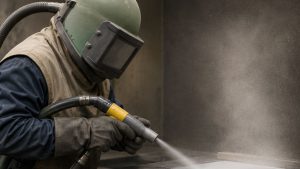
Choosing the right sandblasting media for steel helps remove rust, strip old coatings, create the right surface profile, and improve paint adhesion. The best option depends on whether the steel needs heavy rust removal, smooth finishing, polishing, or light surface cleaning.
Whether you work with fleet vehicles, industrial steel, commercial signage, or fabrication projects, the right abrasive blasting process makes all the difference. Poor surface preparation can reduce coating durability and create uneven finishes. Proper sandblasting helps create a clean surface that improves paint adhesion, wrap installation, and long-term wear resistance.
What Is Sandblasting Media for Steel?
Sandblasting media for steel refers to abrasive material propelled at high speed to clean or prepare metal surfaces. Abrasive blasting removes rust, thick coatings, corrosion, paint, contaminants, and mill scale from steel surfaces.
Different types of blasting media create different surface profiles. Some abrasive media cut aggressively, while others produce smoother finishes. The hardness, shape, and size of abrasive particles affect blasting speed, surface texture, and efficiency.
Steel fabrication shops, automotive businesses, and industrial companies use abrasive blasting primarily before:
- Painting
- Powder coating
- Wrapping
- Welding
- Protective coating applications
- Surface profiling
Why Surface Profile Matters
Surface profiling helps coatings bond correctly to steel. A rougher etch improves coating adhesion, while smoother finishes work better for decorative applications.
Improper profiling may cause:
- Coating failure
- Peeling wraps
- Uneven finishes
- Premature rust formation
The right blasting media creates the correct surface texture without damaging the workpiece.
Best Sandblasting Media for Steel
Each blasting media has a specific purpose. Aggressive options remove rust and coatings faster, while softer media protect delicate surfaces and create smoother finishes.
| Blasting Media | Best For | Surface Finish | Recyclable | Dust Level |
| Steel Grit | Heavy rust and mill scale | Rough profile | Yes | Minimal dust |
| Aluminum Oxide | Removing thick coatings | Sharp profile | Yes | Moderate |
| Glass Beads | Polishing and satin finish | Smooth finish | Yes | Low |
| Copper Slag | Heavy-duty blasting | Aggressive cut | Limited | High |
| Silicon Carbide | Fast cutting applications | Deep etch | Yes | Moderate |
| Walnut Shells | Delicate cleaning | Soft finish | Limited | Low |
| Soda | Eco friendly cleaning | Minimal profile | No | Low |
| Steel Shot | Peening and cleaning | Rounded finish | Yes | Minimal dust |
Steel Grit for Heavy Rust and Mill Scale
Steel grit is one of the most common abrasive blasting media for industrial steel applications. Its angular particles cut through heavy rust, mill scale, and thick coatings quickly.
This abrasive media works well for:
- Structural steel
- Industrial equipment
- Fleet restoration
- Fabrication shops
- Heavy-duty rust removal
Steel grit creates a rough surface profile that improves coating adhesion. Because it is recyclable, many companies use it to reduce long-term blasting costs.
Aluminum Oxide for Surface Preparation
Aluminum oxide is a durable abrasive media known for aggressive cutting power. Many professionals use aluminum oxide for removing thick coatings and preparing steel surfaces before painting.
This abrasive blasting media offers:
- High hardness
- Excellent durability
- Fast stripping speed
- Recyclable performance
Aluminum oxide performs well inside a blast cabinet because it produces consistent results. However, aggressive blasting pressure may damage thin metal surfaces.
Glass Beads for Polishing and Satin Finish
Glass beads work best for polishing and delicate cleaning. Unlike steel grit, glass beads use round particles that create smoother finishes without aggressive etching.
Many shops use glass beads for:
- Stainless steel polishing
- Satin finish applications
- Automotive parts
- Decorative metalwork
Glass beads also produce minimal dust, which improves visibility during the blasting process.
Copper Slag for Heavy-Duty Blasting
Copper slag is an abrasive blasting media designed for industrial cleaning and rust removal. Its sharp particles remove rust, scale, and thick coatings effectively.
This blasting media offers:
- Fast cleaning speed
- Strong cutting power
- Lower material costs
However, copper slag creates more dust than steel shot or steel grit. Proper masks, gloves, and safety equipment are necessary during blasting operations.
Silicon Carbide for Aggressive Cutting
Silicon carbide is one of the hardest abrasive media available today. Its sharp particles cut quickly through rust, coatings, and surface contaminants.
Silicon carbide works best for:
- Fast surface profiling
- Tough metal cleaning
- Industrial blasting applications
Many blasting professionals choose silicon carbide when efficiency and speed matter most.
Walnut Shells for Delicate Cleaning
Walnut shells provide a softer abrasive option for sensitive surfaces. Unlike steel shot or aluminum oxide, walnut shells remove coatings without damaging the underlying material.
This media works well for:
- Wood cleaning
- Soft metal restoration
- Delicate cleaning applications
Walnut shells also produce less surface wear during blasting.
Soda Blasting for Eco Friendly Applications
Soda blasting uses sodium bicarbonate as the abrasive material. This non toxic blasting media works well for lighter cleaning projects.
Soda blasting is commonly used for:
- Light rust removal
- Automotive restoration
- Surface cleaning
- Paint stripping
Because soda dissolves easily, cleanup becomes easier after blasting.
Steel Shot for Surface Cleaning and Peening
Steel shot contains spherical steel particles designed for cleaning and strengthening metal surfaces. Unlike angular steel grit, steel shot produces smoother finishes.
Steel shot works well for:
- Surface cleaning
- Shot peening
- Removing light rust
- Surface strengthening
Its rounded shape reduces aggressive etching while maintaining cleaning efficiency.
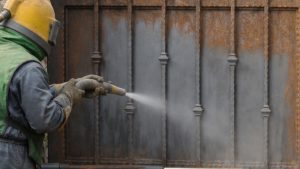
How to Choose the Right Sandblasting Media for Steel
Choosing the right sandblasting media for steel depends on the surface condition, desired finish, steel thickness, and blasting setup. The wrong abrasive blasting media may damage the surface or reduce coating durability.
Surface Condition
Heavy rust, mill scale, and thick coatings need aggressive abrasive media with strong cutting power.
Best options include:
- Steel grit
- Aluminum oxide
- Silicon carbide
- Copper slag
Light rust and delicate cleaning require softer blasting media that reduce surface wear.
Better choices include:
- Glass beads
- Soda
- Walnut shells
Desired Finish
The desired finish affects how the steel surface looks after abrasive blasting.
For rough surface profiling and stronger coating adhesion:
- Steel grit
- Aluminum oxide
For smoother finishes and polishing:
- Glass beads
- Steel shot
Different abrasive media create different surface textures on steel.
Steel Thickness
Thin steel surfaces require lower blasting pressure to prevent warping or damage.
For delicate workpieces:
- Use lower blasting power
- Choose finer abrasive particles
- Reduce blasting speed
This approach helps protect the metal surface during sandblasting.
Blast Cabinet vs Open Blasting
Blast cabinet systems often use recyclable abrasive media like steel grit, steel shot, and aluminum oxide.
Open blasting projects commonly use:
- Copper slag
- Crushed glass
- Soda blasting media
Project size, recovery access, and cleanup conditions usually determine the best blasting media option.
Why Surface Preparation Matters Before Paint and Wraps
Proper abrasive blasting creates cleaner steel surfaces that improve paint and wrap adhesion. Poor surface preparation may reduce durability and shorten coating lifespan. A 2024 Association for Materials Protection and Performance report found that 75% of coating failures are caused by poor surface preparation, which is why steel should be properly cleaned, profiled, and inspected before paint or wraps are applied.
A properly blasted steel surface helps:
- Improve coating durability
- Reduce rust formation
- Create uniform finishes
- Increase wrap lifespan
- Improve customer satisfaction
Surface preparation also improves visual appearance for commercial branding projects.
Coating Adhesion and Durability
Abrasive blasting creates a textured surface that helps coatings bond securely. Smooth untreated steel may prevent coatings from adhering properly.
Proper surface profiling improves:
- Paint durability
- Powder coating adhesion
- Vinyl wrap performance
- Corrosion resistance
Choosing the correct blasting media directly affects long-term coating performance.
Common Sandblasting Mistakes
Many blasting problems happen because the wrong abrasive blasting media was selected. Improper blasting techniques may also damage steel surfaces.
Common mistakes include:
- Using overly aggressive abrasive media
- Ignoring steel thickness
- Choosing low-quality blasting media
- Using excessive blasting power
- Skipping safety equipment
These issues may increase material costs and reduce project quality.
Ignoring Safety Equipment
Abrasive blasting creates airborne dust and particles that may affect worker safety. Operators should always wear:
- Masks
- Gloves
- Eye protection
- Protective clothing
Avoid using silica sand for blasting unless proper controls are in place. Inhaled silica dust can be dangerous, so many shops choose safer alternatives like steel grit, glass beads, soda, or recycled glass.
Choosing the Wrong Nozzle Size
Nozzle size affects blasting speed, pressure, and media consumption. Larger nozzles increase blasting power but may waste abrasive material.
Smaller nozzles improve:
- Precision
- Media efficiency
- Surface control
Matching nozzle size to abrasive media improves blasting performance.
Wet Blasting vs Dry Blasting for Steel
Both wet and dry abrasive blasting methods offer different advantages depending on the steel surface, project size, and cleaning requirements.
| Blasting Method | Best For | Main Benefits | Common Applications |
| Wet Blasting | Delicate surfaces, automotive restoration, light rust | Reduces airborne dust, lowers surface heat, improves visibility, reduces static buildup | Automotive parts, enclosed environments, sensitive steel surfaces |
| Dry Blasting | Heavy rust, thick coatings, industrial steel cleaning | Faster cleaning speed, stronger abrasive power, better rust removal | Structural steel, industrial equipment, large-scale surface preparation |
Wet blasting improves operator safety by reducing dust during the blasting process. Meanwhile, dry blasting remains the preferred option for aggressive steel cleaning and faster surface preparation.
Comparing Recyclable and Disposable Blasting Media
Choosing between recyclable and disposable blasting media affects operating costs, efficiency, and cleanup requirements.
| Media Type | Common Blasting Media | Main Advantages | Best For |
| Recyclable Abrasive Media | Steel grit, steel shot, aluminum oxide, silicon carbide, glass beads | Lower operating costs, improved efficiency, reduced waste, better long-term value | Blast cabinet systems, industrial steel blasting, large-scale projects |
| Disposable Blasting Media | Copper slag, soda, crushed glass, walnut shells | Lower upfront costs, easier cleanup, convenient for open blasting | Mobile blasting, light cleaning, single-use applications |
Many industrial facilities prefer recyclable abrasive media because they improve efficiency and reduce material costs over time.
Eco Friendly Abrasive Blasting Options
Many businesses now choose eco friendly blasting media to reduce environmental impact. Non toxic abrasive materials also improve workplace safety.
Popular eco friendly blasting media include:
- Soda
- Walnut shells
- Recycled glass
- Glass beads
These abrasive media produce lower dust levels and safer cleanup conditions.
Why Businesses Choose Eco Friendly Media
Eco friendly abrasive blasting media help:
- Reduce hazardous waste
- Improve worker safety
- Lower disposal costs
- Support environmental regulations
Many customers also prefer environmentally responsible blasting methods.
Conclusion
The best sandblasting media for steel depends on the job. Use steel grit, aluminum oxide, or silicon carbide for heavy rust and coating removal. Choose glass beads, steel shot, soda, or walnut shells when the goal is a smoother finish, polishing, or delicate cleaning.
Need steel surface prep before vehicle wraps, signage, paint, or branded graphics? CARV helps businesses prepare clean, durable surfaces for better adhesion and longer-lasting visual branding. Contact us today to get started on your next project.
FAQs
What abrasive blasting media creates a satin finish?
Glass beads and steel shot create a satin finish on steel because they clean the surface without leaving a deep, aggressive profile.
What blasting media works best for removing thick coatings?
Aluminum oxide, copper slag, and silicon carbide work best for removing thick coatings because they cut through paint, rust, and surface buildup quickly.
Which blasting media produces minimal dust?
Glass beads, steel shot, and wet blasting produce minimal dust compared to more aggressive disposable abrasive media.
Are walnut shells safe for delicate cleaning?
Yes. Walnut shells are safe for delicate cleaning because they remove light coatings with less surface wear, making them useful for softer materials or sensitive parts.