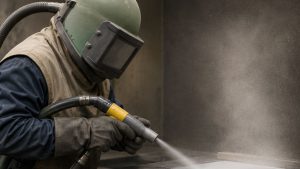
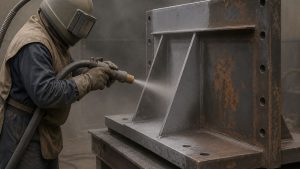
If you’ve ever watched traditional sandblasting in action, you know how intense the dust clouds can get. Now imagine a method that delivers the same power, sometimes even better, but with significantly reduced dust, less mess, and safer conditions for everyone around. That’s the power of dustless sandblasting. It’s becoming the preferred surface cleaning and surface preparation method for automotive, restoration, marine, commercial, and industrial work.
Whether you’re a business owner, a DIY restorer, or someone looking for the safest way to clean or strip material, understanding what is dustless sandblasting is important. Knowing how dustless sandblasting works helps you compare it with other blasting methods. This makes it easier to choose the right process for your job.
What Is Dustless Sandblasting?
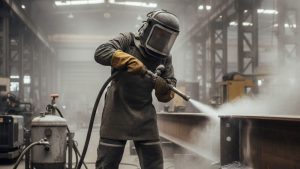
Dustless sandblasting is a wet blasting method that uses a mixture of water and abrasive media (such as crushed glass) to clean, strip, or prepare a surface. Unlike traditional sandblasting, which relies on dry sand particles and air pressure, dustless blasting adds moisture to the blasting process. That single change makes a massive difference.
When water is added, it traps the airborne dust, paint chips, and abrasive particles before they spread into the air. This reduces the dust produced, keeps harmful particles from floating around, and minimizes health risks for anyone nearby. It’s a cleaner, safer, and more controlled method that avoids the messy cleanup associated with dry blasting. If you’ve ever avoided blasting because you didn’t want to deal with dust everywhere, this is the solution.
How to Sandblast Without Dust
To sandblast without dust, use the dustless blasting method. This technique involves combining water with abrasive media (like crushed glass) under pressure. The water traps dust, paint chips, and debris, preventing them from becoming airborne. The result is a cleaner, safer workspace with reduced mess and no harmful particles floating around. By using this wet blasting approach, the cleanup is quicker, and surfaces are protected from warping due to lower heat and friction.
How Dustless Sandblasting Works (Step by Step)
Even though dustless sandblasting uses water, it’s not the same as power washing or rinsing debris off a surface. It’s still a high-power stripping method, just with better control.
The Water and Abrasive Mixture
Dustless sandblasting equipment combines water, abrasive media (such as crushed glass, garnet, or another mild abrasive), and air pressure inside a pressurized machine. This controlled mixture creates the power needed to strip paint, rust, and contaminants while significantly reducing dust.
The Blast Nozzle
The operator uses a blast nozzle to direct the mixture at the workpiece. When it hits the surface, the abrasive media begins cutting, stripping, or etching away the top layer. This removes paint, rust, dirt, grease, oil, old coatings, and other contaminants.
Water Traps the Dust
As abrasives strike the surface, water captures broken-down particles, preventing them from becoming airborne. This keeps the area cleaner and reduces friction and heat, which helps prevent warping on thin metal.
Slurry Falls to the Ground
Instead of floating dust, you get a wet slurry that falls to the ground by gravity, making cleanup faster. This entire cleaning process is more controlled, safer, and ideal for sensitive areas where dust would normally be a problem.
Dustless Sandblasting vs Traditional Sandblasting
Here’s a clear side-by-side comparison:
| Feature | Dustless Sandblasting | Traditional Sandblasting |
| Dust | Significantly reduced | High airborne dust |
| Media | Wet media + water | Dry sand or abrasive |
| Heat/Friction | Reduced friction = less warping | Higher heat = more warping risk |
| Cleanup | Faster slurry cleanup | Long cleanup due to fine dust |
| Equipment Setup | Less containment required | Requires tarps, filters, and heavy prep |
| Safety | Lower exposure to harmful particles | Increased respiratory risk |
| Ideal For | Cars, metal parts, wood, masonry | Heavy industrial coatings |
| Environmental Impact | More eco-friendly | More dust pollution |
If dust, heat, safety, or environmental impact are concerns, dustless blasting is the better option. It offers a cleaner, safer, and more controlled approach compared to traditional methods.
Automotive Dustless Blasting and Surface Prep
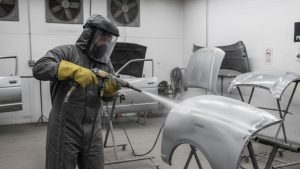
Dustless blasting is ideal for automotive surface prep. It effectively removes paint, rust, and contaminants from car parts while minimizing damage to the underlying surface. The mixture of water, abrasive media, and air pressure strips away coatings without creating dust clouds, preventing visibility issues and reducing health risks. It’s perfect for vehicle restoration, ensuring a clean surface ready for new paint or coatings with minimal heat buildup that could warp metal parts.
Heavy Equipment Surface Prep with Dustless Blasting
Dustless blasting is a highly effective method for prepping heavy equipment surfaces. It removes rust, grease, oil, and old coatings with minimal dust and heat. By using water alongside abrasives, this process keeps contaminants contained, ensuring a cleaner environment. Dustless blasting is especially beneficial for sensitive equipment like machinery, where precision is needed, and the risk of surface damage or warping is high. It’s an efficient, eco-friendly solution that’s safe for both operators and the equipment itself.
Dustless Sandblasting vs Soda Blasting vs Wet Blasting
Many people confuse different blasting methods. Here’s how they differ:
Soda Blasting
- Uses sodium bicarbonate (baking soda)
- Very gentle
- Great for delicate surfaces, but not ideal for heavy paint removal
- Creates residual dust despite being low-impact
Wet Blasting
- A broad category that includes dustless blasting
- Uses water + abrasive
- Dustless blasting is a form of wet blasting
Dustless Sandblasting
- Uses water + abrasive + air
- Strong enough to strip rust and paint
- Gentle enough for sensitive materials
- Better dust control than soda blasting
If you need stronger stripping power and low dust, dustless blasting is the most efficient method.
Benefits of Dustless Sandblasting
Dustless sandblasting offers advantages you don’t get with dry blasting.
Significantly Reduced Dust
The biggest benefit: dramatically less dust. Water binds the abrasive particles, paint, and debris, stopping them from becoming airborne dust. This helps maintain visibility for the operator and keeps nearby areas clean. If you’re working in a garage, driveway, or any contained space, dustless blasting is often the safer, cleaner choice.
Reduced Heat and Less Warping
Traditional sandblasting can cause surfaces, especially thin metal, to heat up and warp. Dustless blasting reduces friction and cools the surface instantly.
This is why it’s popular for:
- Car panels
- Motorcycle frames
- Classic vehicle restoration
Faster Cleanup
No one likes spending more time cleaning than blasting. Dustless blasting forms a wet slurry that stays low to the ground, making cleanup easy compared to sweeping endless fine dust.
More Eco-Friendly
Because the dust stays contained, you’re not blasting clouds of contaminants into the air. It also reduces the spread of oil, paint, dirt, and old coatings onto nearby surfaces. Some abrasives, like crushed glass or recycled materials also make the method more sustainable.
Safest Option for Public or Sensitive Areas
If you’re working near grass, buildings, walkways, people, or businesses, dustless blasting helps avoid mess and reduces exposure to harmful particles, making it a safer choice. It’s also ideal for sensitive areas like residential neighborhoods or indoor workshops where dust control is essential.
Applications of Dustless Sandblasting
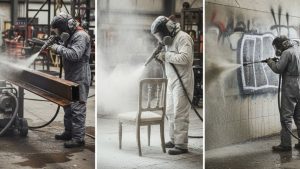
Dustless blasting works on almost any material and surface, making it incredibly versatile.
Here are the most common uses:
- Automotive: Dustless blasting removes paint, rust, and contaminants from car parts, prepping them for new coatings while preventing warping and reducing dust.
- Marine: Ideal for cleaning and stripping boats, trailers, and aluminum surfaces, dustless blasting minimizes damage and dust.
- Commercial: Effective for graffiti removal, cleaning rusty railings, and restoring sign posts, dustless blasting keeps dust and debris at a minimum.
- Residential / Architectural: Perfect for cleaning and restoring brick, wood, concrete, and masonry, dustless blasting avoids heavy dust and surface damage.
- Industrial: Dustless blasting efficiently cleans machinery, removes buildup, and strips oil and grease with minimal dust.
- Specialty Restoration: Ideal for restoring antique metal, black granite headstones, and detailed parts, dustless blasting ensures precise abrasive selection without damage.
Limitations of Dustless Sandblasting
Dustless blasting is powerful, but like any method, it does have limitations. The wet slurry is easier to manage than airborne dust, but it still requires proper shoveling, disposal, or rinsing. It’s also not the best option for extremely thick industrial coatings, which may need a dry blast or a harder abrasive to break through effectively.
Quality equipment is essential, as low-end dustless sandblasting machines can struggle with consistency, pressure, and overall efficiency. Water can also affect certain moisture-sensitive surfaces, and the added moisture causes abrasive media to break down faster than they would in a dry blasting setup.
Is Dustless Sandblasting Right for Your Job?
Dustless blasting is ideal if you need a cleaner work area, less dust, lower warping risk, and safe blasting around people or property, especially when working with paint, rust, wood, or metal. If you’re cleaning a small workspace and want to avoid contamination, or you’re handling precision parts, this method is usually the better choice. And if you’re unsure which approach fits your project, the team at CARV can help you decide on the safest, most efficient option for your needs.
Other Services Offered by CARV
Along with dustless sandblasting, CARV offers a range of high-quality sign-making and fabrication services for businesses that need durable, custom-built signage. Every sign is produced in-house with premium materials and careful craftsmanship.
Wholesale Sandblasted Cedar Signs
We create sandblasted cedar signs using select-grade western red cedar, known for its durability and natural resistance to decay. These signs offer a rustic, premium look with deep textures and are available for reliable, high-volume wholesale production.
Sandblasted HDU Signs
We also produce sandblasted HDU signs for clients who want the classic sandblasted style in a lighter, more stable material. HDU doesn’t warp or rot, making it ideal for outdoor signage, 3D logos, and detailed designs that require sharp, weather-resistant finishes.
Channel Routed & Specialty Signs
For more intricate projects, our channel-routed specialty signs allow for precise lettering, patterns, and custom shapes. These signs bring a polished, high-end look to boutiques, restaurants, offices, and any brand needing standout visual design.
No matter the material or style, every sign reflects CARV’s commitment to accuracy, durability, and clean, professional results.
Conclusion
Dustless sandblasting has changed how people think about surface cleaning and restoration.
It delivers powerful paint and rust removal without the mess and health risks that come from dust, abrasive particles, and harmful debris. The process is safer, more efficient, and ideal for surfaces that require precision or protection from warping, heat, or damage.
At CARV, we specialize in controlled, studio-based blasting for automotive parts, metal surfaces, restoration projects, and custom design work that demands accuracy. If you want cleaner results, faster cleanup, and a safer blasting experience, contact us now! We’re here to help you get it done right.
FAQs
How does a dustless sandblaster work?
A dustless sandblaster works by mixing water, abrasive media, and air pressure inside a pressurized tank. When the mixture is released through the blast nozzle, the water traps dust and debris while the abrasives strip away paint, rust, or contaminants. This reduces airborne dust and creates a cleaner blasting environment.
What is the difference between sandblasting and dustless blasting?
The difference between sandblasting and dustless blasting is the use of water. Traditional sandblasting uses dry sand or abrasive media, creating heavy dust, while dustless blasting uses a water-and-abrasive mixture that significantly reduces dust and heat.
Can dustless blasting remove paint?
Yes, dustless blasting can remove paint effectively. The abrasive media cuts into the coating while the water keeps dust down and prevents warping. This makes it suitable for car parts, metal surfaces, wood, and masonry.
Does Dustless Blasting use water?
Yes, dustless blasting uses water as part of its mixture. The water binds dust and debris during the process, keeping the work area cleaner and reducing airborne particles.