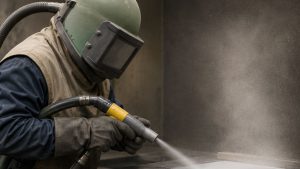
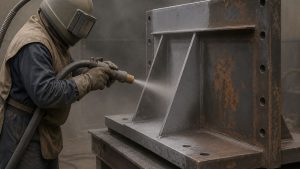
Wood can last for decades, but layers of paint, varnish, and dirt often hide its natural beauty. If you’ve ever seen old furniture or beams, you know how easily their natural beauty gets hidden. Fortunately, soda blasting, or sandblasting wood, is an incredibly effective way to restore worn surfaces. Unlike manual sanding, chemical stripping, or power washing, this method offers greater consistency and speed. The sandblasting process uses compressed air with abrasive materials, removing years of buildup and revealing the grain in minutes.
Done correctly, sandblasting reveals the natural grain of the wood. It also prepares the surface for refinishing or sealing. This method leaves behind a smooth surface ready for stain, paint, or protective coatings. Whether restoring furniture, cabinets, or decorative beams, the right approach matters. Therefore, understanding techniques, different abrasives, abrasive media, and air pressure settings minimizes damage and ensures professional-level results.

What Is Sandblasting Wood?
Sandblasting, also called media blasting or abrasive blasting, is a proven technique for preparing wood surfaces. It propels abrasive media like walnut shells, soda, or glass beads using compressed air.
It’s faster and more uniform than sandpaper and eliminates the need for time-consuming manual sanding or harsh chemical strippers. The method is versatile too, especially when compared to traditional sandblasting. You can strip old paint, clean dirt, or add decorative textures.
- Sandblasting wood furniture can bring antique pieces back to life.
- Can you sandblast wood cabinets? Yes, it’s a reliable way to strip away coatings and prepare them for a new finish.
- For large-scale jobs, a sandblasting machine for wood ensures speed and consistency across beams, panels, and outdoor projects.
Why Sandblast Wood? (Applications & Benefits)
Here’s where sandblasting shines compared to traditional methods:
- Paint and Coating Removal: Blasting removes old paint, varnish, and stain quickly, even in grooves and corners where sanding or power washing struggles.
- Furniture and Cabinet Refinishing: If you’re asking, “Can you sandblast wood furniture?”, the answer is yes. It’s an efficient way to restore antique chairs, tables, or cabinets, giving them a clean slate for refinishing.
- Rustic or Weathered Look: By wearing away softer fibers, blasting creates a natural, rustic texture often used for beams, signage, or barn wood projects.
- Decorative Applications: Using stencils or templates, blasting can produce fine details, patterns, and lettering, ideal for custom signs and art pieces.
- Surface Prep for New Coatings: Blasting prepares wood for stains, paint, or sealants, improving adhesion and extending durability.
Types of Sandblasting Equipment
Finding the best sandblaster for wood depends largely on the type of project you’re working on. Siphon feed systems are ideal for smaller projects that require a delicate touch, such as refinishing furniture or cabinets. On the other hand, pressure feed systems are powerful and fast, making them excellent for paint removal on beams. They work well on exterior wood, though caution is needed to avoid gouging softer surfaces.
Meanwhile, gravity feed systems are compact and provide the precision needed for fine details or decorative blasting. If you’re searching for “wood sandblasting near me,” professional services often use a combination of these systems. This approach matches each project’s needs while ensuring safe and efficient results.
Abrasive Media: What Works Best for Wood
Not all abrasive materials are safe for wood. Choosing the wrong blasting medium can scratch or weaken the grain. Safer alternatives include:
| Abrasive Media | Characteristics | Best Uses |
| Soda | Gentle, dissolves easily | Cleaning cabinets, antiques |
| Walnut Shells | Biodegradable, soft | Removing coatings without harming wood |
| Corncob Grit | Mild, natural | Restoring delicate furniture |
| Glass Beads | Produces a smooth finish | Decorative blasting, light texture |
Walnut shells for sandblasting wood are a popular choice for furniture refinishing because they effectively remove coatings. They’re tough yet gentle, preserving the wood’s natural look without causing unnecessary damage.
Air Pressure and Nozzle Settings
Proper air pressure and nozzle selection are critical for safe blasting. It’s best to keep air pressure between 30–50 PSI to avoid stripping too aggressively. Using the right range helps protect the wood surface while still achieving efficient results.
For more control, smaller nozzles between 1/8–1/4 inch provide greater precision. Choosing durable nozzle materials such as ceramic or tungsten carbide ensures long-term performance. Always start at the lowest effective pressure and gradually increase as needed for safe, consistent blasting.
How Different Woods Respond to Blasting
Every type of wood reacts differently:
- Softwoods (pine, fir, cedar) – Softer rings wear faster, creating a textured, weathered effect.
- Hardwoods (oak, maple, walnut) – More resistant and durable, requiring slightly more pressure.
- Decorative applications – Any type of wood can be blasted to create textures, patterns, or rustic finishes.
Safety Considerations
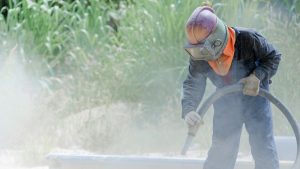
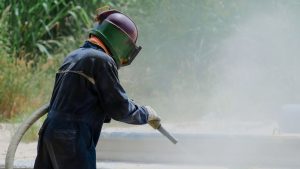
Sandblasting creates wood dust and fine particles, making proper protection essential for safety. Always wear a face mask or respirator to avoid inhalation, and use eye protection such as goggles to keep debris out of your eyes, preventing any damage.
In addition, wear protective clothing and gloves to prevent irritation from abrasive materials. It’s also important to work in a well-ventilated area or use dust collection systems to minimize environmental impact.
Sandblasting vs. Traditional Refinishing
| Method | Pros | Cons |
| Sandblasting | Fast, efficient, reaches details, eco-friendly options | Requires equipment and skill |
| Manual Sanding | Low cost, accessible | Slow, inconsistent, labor-intensive |
| Chemical Strippers | Removes coatings effectively | Toxic, messy, harmful to the environment |
| Power Washing | Good for large outdoor areas | Can raise grain, cause water damage |
For most projects, sandblasting is the most efficient way to remove coatings and prepare wood surfaces. It eliminates the time-consuming drawbacks often associated with manual methods like sanding or chemical stripping.
Professional vs. DIY Sandblasting
DIY sandblasting is possible with portable equipment, but it comes with risks. Improper settings or abrasive choices can easily damage wood, making it less reliable for delicate projects. Professional services, on the other hand, bring the right sandblasting machine for wood, along with the experience and precision needed for consistent results.
If the question is “Does sandblasting damage wood?” the answer depends on how the job is done. With the wrong abrasive or too much pressure, wood can indeed be damaged. However, when handled with the proper equipment, correct abrasive media, and controlled air pressure, sandblasting is safe, efficient, and highly effective.
Cost of Sandblasting Wood
The cost of sandblasting wood can vary based on several factors, including project size, type of wood, chosen abrasive media, and the amount of prep work required. For example, blasting a small furniture piece may cost around $75–$150, while larger projects like beams or exterior wood can range from $300–$1,000+, depending on complexity and coatings.
While these numbers provide a general idea, hiring professionals is often more cost-effective than purchasing your own blasting system for a one-time project. For the most accurate estimate, it’s best to consult a trusted local service like CARV, which can evaluate your specific needs and provide a tailored quote.
Maintenance After Sandblasting
Once blasting is complete, it’s important to protect your wood for the restoration to extend its lifespan. Start by sealing with a clear protective coat, then apply a stain or paint for added durability and improved aesthetics. Regular cleaning also helps keep dirt and debris from building up again. Skipping these steps can leave the wood vulnerable to moisture, pests, and UV damage, shortening the life of your refinished surface.
Other Services Offered by CARV
In addition to sandblasting wood, CARV provides a range of professional sign solutions designed to help businesses stand out with durability and style:
- Wholesale Sandblasted Cedar Signs – Crafted from premium western red cedar, these signs offer a natural, rustic appearance that holds up beautifully in outdoor environments. Cedar is a popular choice for businesses seeking long-lasting signage with timeless character.
- Sandblasted HDU Signs – High-Density Urethane (HDU) is an excellent alternative to wood, providing the same dimensional look without risk of rot or warping. Perfect for detailed designs, HDU signs are lightweight, durable, and built to withstand the elements.
- Channel Routed Specialty Signs – For a sleek and polished appearance, channel routed signs combine precision cutting with a wide variety of finishes. These signs are highly customizable, making them ideal for businesses that want to showcase logos, lettering, and unique design elements with sharp detail.
Each of these options reflects CARV’s commitment to quality craftsmanship, attention to detail, and long-lasting results. Whether you’re looking for a rustic wood style, a modern dimensional sign, or a fully custom design, CARV has the expertise to deliver signage that captures attention and leaves a lasting impression.
Conclusion
Sandblasting isn’t just about cleaning wood. It’s about restoring its character, extending its life, and preparing it for new possibilities. From refinishing furniture to rustic beam restoration, the process saves time, enhances results, and achieves finishes that traditional methods often can’t match. Choosing the right blasting system, abrasive media, and air pressure ensures the best outcome, and while DIY works for small jobs, larger or delicate projects are best handled by professionals.
At CARV, we specialize in precision wood blasting as part of our expert surface finishing services. Whether you’re restoring cabinets, refinishing furniture, or managing a large-scale commercial project, our team delivers safe, efficient, and detail-focused results. Contact us today to learn how CARV can bring your wood projects back to life.
FAQs
Can you sandblast wood?
Yes, you can sandblast wood, but it requires the correct abrasive media and controlled air pressure.
Can you sandblast wood furniture?
Yes, you can also use dry ice to sandblast wood furniture to remove coatings and prepare it for refinishing or restoration.
Can you sandblast wood to remove paint?
Yes, you can sandblast wood to remove paint quickly, even from grooves or detailed surfaces.
How to sandblast wood?
To sandblast wood, select a gentle abrasive, adjust air pressure, and wear proper protective equipment.