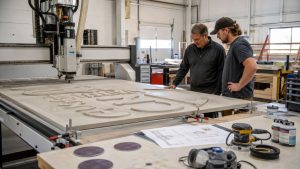
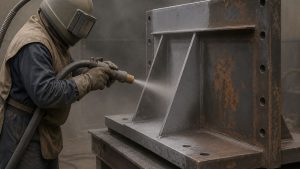
A sandblasted steel finish creates a clean, textured appearance that works well in signage, fabrication, and architectural projects. Many businesses choose this finish because it improves visual appeal while creating a durable surface. The sandblasting process also removes surface contaminants, prepares metal surfaces for coatings, and creates a consistent finish that looks modern and professional.
From custom branding to architectural design, a sandblasted steel finish remains popular across various industries. Its matte finish reduces glare while adding texture and depth to stainless steel and mild steel surfaces.

What Is a Sandblasted Steel Finish?
A sandblasted steel finish forms when abrasive media strikes metal surfaces at high speed. This blasting process removes imperfections while creating a textured finish or smooth finish, depending on the abrasive material used.
The final appearance depends on:
- Blasting media
- Surface treatment method
- Air pressure
- Surface preparation process
- Underlying material
Unlike polished finishes, a sandblasted finish on a stainless steel surfaces diffuses light evenly. As a result, the metal gains a softer and more refined appearance.
How the Sandblasting Process Works
The sandblasting process uses compressed air to propel abrasive particles onto a surface. A blasting machine or blasting cabinet directs the abrasive blasting media toward stainless steel, mild steel, or other hard materials.
Common blasting media include:
| Abrasive Media | Typical Result |
| Glass beads | Smooth surface and satin finish |
| Aluminum oxide | Aggressive cleaning and rough surface |
| Steel grit | Deep textured finish |
| Silicon carbide | Fast cutting and surface removal |
| Baking soda | Gentle cleaning of surfaces |
| Glass grit | Moderate surface texture |
Some projects use wet blasting instead of dry blasting. Wet blasting reduces dust while improving air quality during surface treatment.
Why Businesses Choose Sandblasted Stainless Steel
Modern businesses often prefer sandblasted stainless steel because it balances durability with aesthetics. The finish looks clean without appearing overly reflective.
A sandblasted stainless steel surface also performs well in commercial environments because it hides fingerprints, water stains, and minor scratches better than polished metal.
Strong Visual Appeal
A sandblasted surface creates depth and texture that improves the appearance of fabricated metal projects. This unique appearance works especially well in interior design and architectural design applications.
Restaurants, offices, retail stores, and hospitality brands frequently use sandblasted stainless steel panels because they create a professional and industrial appearance.
Better Surface Preparation
Preparing surfaces before applying coatings improves long-term durability. Abrasive blasting removes rust, tough coatings, oxidation, and surface contaminants from metal surfaces. The textured surface also helps protective coating systems bond more effectively.
Reduced Glare
Polished finishes reflect light aggressively. In contrast, a matte finish softens reflections and improves readability on custom signage.
This benefit makes sandblasted stainless steel ideal for:
- Exterior signage
- Lobby signs
- Directional signs
- Wall branding
- Architectural panels
Sandblasted Stainless Steel vs Polished Stainless Steel
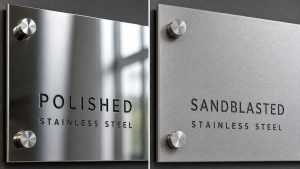
Many people compare sandblasted stainless steel with polished finishes before selecting a surface finish. Each option creates a different visual effect.
| Finish Type | Appearance | Reflectivity | Texture |
| Sandblasted steel finish | Matte finish | Low | Textured finish |
| Satin finish | Soft reflective look | Medium | Smooth surface |
| Mirror polish | Highly reflective | High | Very smooth finish |
| Brushed stainless steel | Linear texture | Medium | Fine grain |
A sandblasted finish stainless steel surface feels more modern and industrial. It also works better in high-traffic commercial spaces.
Types of Abrasive Media Used in Sand Blasting
Different abrasive blasting media create different textures and performance results. Selecting the correct abrasive material affects the final surface texture.
Glass Beads
Glass beads and fine glass beads create a smooth, finish with a subtle satin finish. Bead blasting works well for decorative stainless steel applications.
This method also preserves corrosion resistance while improving visual appeal.
Aluminum Oxide
Aluminum oxide removes tough coatings, rust, and surface contaminants quickly. It creates a rough surface that improves coating adhesion.
Fabrication shops often use aluminum oxide for further processing and applying coatings.
Steel Grit and Steel Shot
Steel grit and steel shot produce aggressive textured finishes on hard materials. These media types work well for heavy-duty industrial applications.
They also help when removing rust from thick steel surfaces.
Baking Soda and Soda Blasting
Soda blasting uses baking soda for gentle cleaning of surfaces without damaging the underlying material. This process works well for delicate metal surfaces.
Dry ice blasting also offers a low-residue alternative for sensitive projects.
Common Applications for Sandblasted Steel Finish
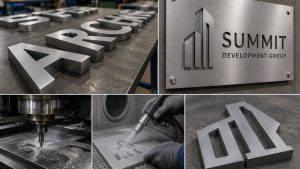
A sandblasted steel finish appears in many commercial and architectural applications because it combines durability with texture.
Custom Signage
Fabricated signs often use sandblasted stainless steel because it creates depth and dimension. The finish also improves readability outdoors by reducing glare.
Popular signage applications include:
- Monument signs
- Lobby branding
- Exterior business signs
- Directional systems
- Dimensional lettering
Architectural Design
Architects frequently specify sandblasted stainless steel panels for modern buildings and interior spaces. The textured finish complements concrete, glass, wood, and exposed steel.
Common architectural uses include:
- Feature walls
- Elevator interiors
- Privacy screens
- Stair systems
- Decorative cladding
Interior Design
Interior design projects often use sandblasted stainless steel for modern commercial environments. The surface texture adds character without overwhelming the space.
Many hospitality and retail projects use this finish to create an upscale industrial appearance.
Surface Preparation Before Applying Coatings
Surface preparation remains one of the most important steps in metal fabrication. Cleaning surfaces properly improves coating adhesion and long-term durability.
According to the Materials Analytical Group, approximately 75% of coating failures happen because of poor surface preparation. Abrasive blasting helps remove surface contaminants while creating the proper surface texture for stronger coating adhesion.
Abrasive blasting removes:
- Rust
- Old paint
- Surface contaminants
- Oil residue
- Oxidation
- Tough coatings
After sand blasting, fabricators often apply:
- Powder coating
- Paint systems
- Clear sealants
- Protective coating layers
Further treatment protects the metal while improving corrosion resistance.
Corrosion Resistance and Durability
Stainless steel naturally offers excellent corrosion resistance. However, proper surface treatment still matters for long-term performance.
A sandblasted stainless steel surface performs well because it resists:
- Moisture exposure
- Surface wear
- Minor scratches
- Water stains
- Outdoor conditions
When paired with a protective coating, the finish remains rust-free for longer periods.
Wear Resistant Performance
Commercial spaces demand durable materials. A sandblasted surface handles daily use better than highly polished metal surfaces.
The textured finish also hides wear patterns more effectively.
Wet Blasting vs Dry Blasting
Both wet blasting and dry blasting achieve similar goals, but each method offers different advantages.
Wet Blasting
Wet blasting mixes water with abrasive particles before the blasting process begins. This method controls dust while improving air quality.
Many shops prefer wet blasting for:
- Interior projects
- Sensitive surfaces
- Reduced cleanup
- Lower airborne particles
Dry Blasting
Dry blasting uses compressed air without water. This process removes material aggressively while creating different textures quickly.
Fabricators often use dry blasting for:
- Heavy rust removal
- Preparing surfaces
- Industrial steel cleaning
- Large fabrication projects
Sandblasting Equipment and Safety
Proper sandblasting equipment improves finish quality while protecting operators during abrasive blasting.
A standard setup may include:
- Air compressor
- Blasting cabinet
- Sand blaster
- Protective clothing
- Safety glasses
- Hearing protection
Protective equipment remains important because abrasive particles travel at high speeds during the blasting process.
Air Quality Considerations
Dust control systems help maintain safe air quality during abrasive blasting operations. Wet blasting systems also reduce airborne particles.
Many professional fabrication shops combine ventilation systems with proper safety procedures.
Maintaining a Sandblasted Steel Finish
Regular maintenance helps preserve the appearance and durability of a sandblasted finish.
For routine care:
- Use a mild detergent
- Wipe surfaces with soft cloths
- Remove moisture buildup
- Avoid harsh chemicals
- Clean water stains quickly
These simple steps help maintain a consistent finish while protecting corrosion resistance.
Avoid Aggressive Cleaning Methods
Harsh chemicals and rough cleaning pads can damage the surface texture. Gentle cleaning methods work best for sandblasted stainless steel.
Proper care also reduces the need for further treatment later.
Key Features of Sandblasted Stainless Steel
A sandblasted steel finish continues growing in popularity because it offers both visual and functional advantages.
Key features include:
| Feature | Benefit |
| Matte finish | Reduced glare |
| Textured finish | Improved visual depth |
| Surface preparation | Better coating adhesion |
| Corrosion resistance | Long-term durability |
| Smooth surface options | Modern appearance |
| Wear-resistant texture | Better performance in commercial spaces |
These qualities make sandblasted stainless steel suitable for signage, fabrication, and architectural projects.
Why Sandblasted Steel Finish Works for Modern Signage
Modern signage depends on materials that balance durability with aesthetics. A sandblasted steel finish delivers both advantages while maintaining a professional appearance.
The finish creates:
- Better readability
- Lower glare
- Improved texture
- Greater visual depth
- Strong architectural character
Businesses also appreciate how the finish complements modern branding styles.
Ideal for Commercial Spaces
Commercial environments require surfaces that look clean without demanding constant maintenance. A sandblasted finish hides fingerprints and minor marks effectively.
This advantage makes it popular for:
- Office interiors
- Retail environments
- Restaurants
- Hotels
- Mixed-use developments
Conclusion
A sandblasted steel finish offers more than texture alone. It improves surface preparation, enhances visual appeal, and supports long-term durability across various industries.
Whether used in custom signage, architectural design, or fabricated metal projects, sandblasted stainless steel continues delivering practical and aesthetic value. The combination of corrosion resistance, matte finish, and textured finish makes it one of the most versatile surface finish options available today.
For businesses seeking a modern industrial appearance, sandblasted stainless steel panels provide a durable and visually striking solution. If you want custom signage or fabricated metal work with a clean, professional finish, CARV can help bring your project to life. Contact us today to discuss your design, material options, and finishing needs.
FAQs
Does sandblasting rust the steel?
Sandblasting leaves raw steel highly vulnerable to “flash rust” caused by ambient moisture in the air. Because the protective outer layer is stripped away, the metal must be primed, painted, or treated with a Rust Inhibitor within hours of blasting.
Can this finish be applied to stainless steel?
Yes, but special care must be taken. Stainless steel is sensitive to iron contamination from blasting equipment, which can ruin its rust-resistant properties. Specialized equipment using non-metallic or inert media is used for stainless steel applications.
How do I clean and maintain a sandblasted steel item?
Because of the porous, matte texture, bare sandblasted steel can accumulate dust and oils over time. To clean it, use a soft brush, warm water, and mild soap. Avoid abrasive scrubbers or chemical cleaners, which can permanently alter the uniform matte texture.
What industries commonly use sandblasted steel?
Sandblasted steel is used to remove rust, mill scale, and impurities, creating a textured surface that maximizes paint and coating adhesion. It is vital in heavy-duty, structural, and aesthetic sectors where durability and corrosion resistance are required.