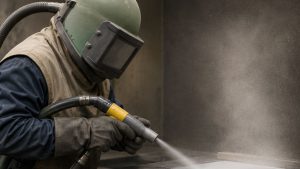
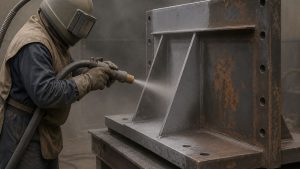
Rust is more than just an ugly orange stain. It eats away at metal surfaces, weakens structures, and leads to costly repairs. Whether it’s the body panels of a classic car, the frame of industrial machinery, or the entire floor of a truck bed, corrosion spreads quickly if left untreated. So, does sandblasting remove rust? Yes, it’s one of the most effective and cost-efficient methods for rust removal. Sandblasting strips away all the rust and prepares bare metal for a protective coating, helping prevent future corrosion.
In this guide, you’ll discover how sandblasting works, the different types of abrasive media used, and how it compares to other rust removal methods. We’ll explore why sandblasting is the go-to solution for everything from restoring tools to repairing entire vehicles and metal restoration projects. You’ll also learn the key benefits of sandblasting. This includes its ability to clean hard-to-reach areas, its time efficiency compared to traditional methods, and how it prepares metal surfaces for durable, long-lasting paint and coatings. Whether you’re a DIY enthusiast or a professional, this guide will show you why sandblasting is a top choice for rust removal and surface preparation.
What Is Sandblasting?
Sandblasting, also called abrasive blasting, is a process where a sandblaster shoots abrasive media, such as sand, steel grit, or glass beads, at high speed against a metal surface. The impact of these particles strips away rust, paint, and other contaminants, leaving behind clean, prepared metal that is media blasted for further treatment.
Unlike manual sanding or harsh chemical methods, sandblasting efficiently removes rust and smooths out rough or pitted surfaces in a fraction of the time. It also reaches hard-to-access areas, like corners and seams, making sure the entire surface is cleaned and prepped. This prepares the surface for primer, paint, or a protective coating. This makes it an essential method for metal restoration projects, from automotive repairs to industrial machinery.
Common Abrasive Media for Rust Removal
Different blasting projects call for different media. Here are the most common options:
| Abrasive Media | Best Use | Pros | Considerations |
| Sand | General rust removal | Affordable, effective | Creates dust, less common today |
| Aluminum Oxide | Thick rust, paint stripping | Aggressive, reusable | Can warp thin panels |
| Glass Beads | Smooth finishes | Gentle polish | Slower on heavy rust |
| Walnut Shells | Antique parts, thin body panels | Gentle, eco-friendly | Won’t remove deep pits |
| Baking Soda | Delicate cleaning | Non-toxic, safe | Not for extensive rust |
| Steel Grit | Frames, structural steel | Fast, strips all the rust | Too aggressive for thin panels |
Choosing the right media is essential. For example, blasting the underside of a car frame may call for steel grit, while restoring thin body panels is better suited for walnut shells or glass beads.
How Does Sandblasting Remove Rust?
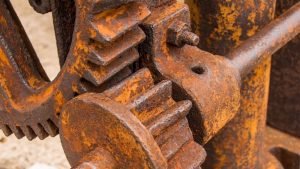
Rust forms when metal reacts with oxygen and moisture, creating flaky iron oxide. Since rust is weaker than the solid metal beneath it, abrasive blasting effectively breaks it away while preserving the stronger surface. The process works by using abrasive particles to hit the surface rust, cracking and stripping it off, exposing the bare metal beneath, and removing rust pits and corrosion.
The blasting process leaves a slightly rough profile on the metal, making it ideal for primer or paint to adhere. This method is faster and more thorough than wire brushing, vinegar baths, or chemical strippers. In most cases, sandblasting is the only reliable way to remove rust from hard-to-reach areas, such as corners, welds, or the underside of panels.

The Sandblasting Process
Here’s what a typical rust removal job looks like:
- Inspection – The rusty part is assessed to determine the right pressure and abrasive media.
- Surface Prep – Areas not being blasted (like glass, rubber, or thin panels) are masked off.
- The Blast – The operator uses the sand blaster to strip away rust, paint, and scale.
- Cleanup – Media and dust are cleared away so the bare metal is fully exposed.
- Protective Coating – A rust inhibitor, primer, or paint is applied immediately to prevent flash rust.
Without coating, bare metal can start rusting again within hours. That’s why sealing the surface right after blasting is essential.
Applications of Sandblasting
Sandblasting is used in many industries and projects, including:
- Automotive restoration – entire car bodies, frames, body panels, rims, and floor pans.
- Industrial machinery – repairing rusty equipment and tools.
- Structural steel – beams, columns, and large construction projects.
- Marine uses – boats, trailers, and docks exposed to saltwater.
- Residential and commercial fencing – removing rust before repainting.
Safety and Environmental Considerations
Sandblasting requires strict safety precautions to protect both the operator and the surrounding environment. Operators must wear PPE (personal protective equipment) such as respirators, gloves, protective suits, and safety goggles to avoid inhaling harmful dust or particles. OSHA guidelines mandate dust containment systems, particularly when using silica sand, which can pose health risks if inhaled. As a result, many professionals now opt for safer, less harmful media like garnet, glass beads, or aluminum oxide, which are not only safer for workers but also more environmentally friendly, reducing waste and hazardous materials.
Moreover, sandblasting can generate a significant amount of debris and dust. That’s why a reputable sandblasting service will ensure proper dust control measures are in place to protect both the workspace and the surrounding areas. Choosing a professional service that follows safety standards, uses eco-friendly media, and ensures effective containment is crucial to maintaining a safe, compliant, and efficient operation.
Cost of Sandblasting
The cost of sandblasting varies depending on factors like the size of the surface or part, the type of abrasive media used, and the severity of the rust and corrosion. For example, sandblasting a single body panel will be much cheaper than restoring an entire car. The location of the service, whether done in a shop or on-site, can also impact the price.
On average, sandblasting costs range from a few hundred dollars for small parts to several thousand for a full car restoration. While this may seem like a significant investment when considering the heat involved in restoration, it’s often more cost-effective than replacing entire panels or frames. For an accurate estimate, it’s best to consult a local service like CARV, which can provide a tailored price based on your specific needs.
After Sandblasting: Preventing Rust
Blasting removes rust but also exposes bare metal, which can rust again quickly if left untreated. To fix the issue, it’s crucial to apply a primer or rust inhibitor immediately after sandblasting to seal the bare metal. Durable protective coatings like powder coating or paint should be used to provide a strong barrier against moisture, which is one of the main contributors to rust. These coatings not only protect the metal from future corrosion but also enhance the metal’s appearance and durability.
Maintaining the surface is key to long-lasting protection. Regularly keep it dry, perform routine inspections, and touch up any areas where the coating may have worn away due to exposure or wear. For vehicles, machinery, or industrial equipment, keeping the surface clean and free of moisture is essential. A well-prepared and properly coated surface, with periodic maintenance, can last for years without rusting again, saving you money on repairs and extending the life of your investment.

Conclusion
So, does sandblasting remove rust? Absolutely. It’s one of the fastest and most effective methods for restoring metal surfaces, whether it’s a single rusty part or an entire vehicle. By using the right abrasive media, following the proper process, and sealing the bare metal with a protective coating, you can significantly extend the life of steel, tools, vehicles, and more.
At CARV, we specialize in professional sandblasting and rust removal for automotive, industrial, and commercial projects. If you’re looking to restore metal surfaces quickly, safely, and cost-effectively, we’re here to help. Contact us today to get started on your restoration project.
FAQs
How does sandblasting remove rust?
Sandblasting removes rust by using high-pressure abrasive media to physically break apart the rust and strip it from the metal surface, revealing clean, bare metal underneath. The abrasive particles create a rough profile, making it ideal for primer or paint adhesion and preventing any scratch marks. This process is highly effective for deep rust and hard-to-reach areas.
Will rust come back after sandblasting?
Rust can return after sandblasting if the bare metal is left unprotected. To prevent rust from coming back, it’s essential to apply a primer, rust inhibitor, or protective coating immediately after sandblasting. Regular maintenance and touch-ups will also help keep rust at bay.
What is the best method to remove rust?
The best method to remove rust depends on the severity and location of the rust, but sandblasting is one of the most effective ways for large areas or deeply corroded metal. For delicate surfaces, methods like chemical rust removers or laser cleaning may be more suitable. Consulting a professional service like CARV ensures the right approach for your specific needs.
Can you sandblast rust off metal?
Yes, sandblasting is a highly effective way to remove rust from metal surfaces. The abrasive media strips away the rust, leaving behind clean, prepared metal. This method is particularly useful for large surfaces or areas with heavy corrosion.