When it comes to restoring your car’s frame, choosing the best media for sandblasting car frame is crucial. Using the wrong blasting material can cause unnecessary damage, lead to poor surface preparation, and cost you time and money in the long run.
Whether you’re tackling a vintage restoration or simply cleaning up a rusted frame, selecting the right sandblasting media can make all the difference. In this guide, we’ll walk you through the top sandblasting media choices, offer expert tips, and give you the knowledge you need to achieve a perfectly restored frame.
What is Sandblasting and Why is it Important for Car Frame Restoration?
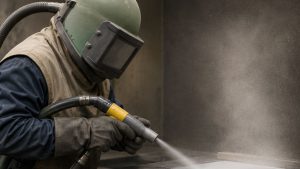
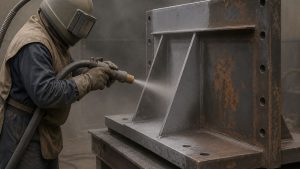
Sandblasting, or abrasive blasting, is a method used to clean and prepare surfaces by shooting abrasive material at high velocity. This technique is particularly useful in auto restoration, as it helps to strip paint, remove rust, and clean surfaces to prepare them for new coatings. When working with car frames, choosing the right blasting media ensures you get a clean, smooth, and damage-free surface.
Why is it so important?
- Removes rust: Rust can deteriorate the integrity of your car frame. Sandblasting is one of the most effective methods for removing rust and giving your frame a fresh, clean start.
- Prepares for paint: Proper surface preparation is key to ensuring that new paint or coatings adhere well. Sandblasting leaves an ideal surface profile for paint to stick, preventing peeling and flaking in the future.
- Cleans hard-to-reach areas: Sandblasting can be used in tight spaces, such as frame crevices and body parts that are tough to clean with traditional methods.
Choosing the Best Media for Sandblasting Car Frames
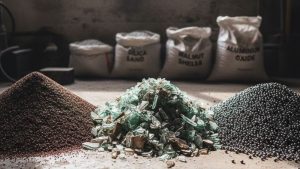
Now, let’s dive into the various abrasive media options available for sandblasting. The best media for sandblasting a car frame depends on the type of job, the desired finish, and the material of the car frame itself. Here’s a breakdown of the most popular blasting media for restoring car frames:
Garnet (40/70 Mesh)
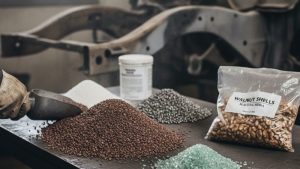
Garnet (40/70 mesh) is a fast-cutting, sharp media perfect for rust removal and paint stripping without damaging the underlying metal. It efficiently removes heavy coatings from steel frames while providing a smooth finish. Eco-friendly and recyclable, garnet leaves a clean surface ideal for painting. However, it tends to be more expensive than some other options.
Crushed Glass (Recycled Glass)
Recycled glass is an eco-friendly, cost-effective abrasive that strikes the perfect balance between sharpness and gentleness. It effectively removes rust and paint without damaging the underlying metal, making it ideal for automotive restoration. This media leaves a smooth surface that promotes strong paint adhesion and can be recycled for future use. That said, it may wear down faster under heavy-duty use.
Soda Blasting (Sodium Bicarbonate)
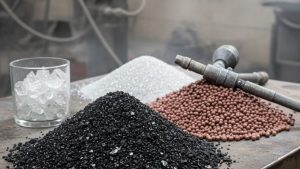
- Soda blasting (sodium bicarbonate) is a soft, gentle media ideal for delicate areas like body panels and sheet metal. It’s the go-to choice for vintage car restoration or frames with thinner materials. This non-toxic, eco-friendly media won’t warp thin metal and leaves no residue that could affect paint adhesion. However, it’s not effective for heavy-duty rust removal.
Aluminum Oxide
Aluminum oxide is one of the hardest abrasives, making it ideal for aggressive stripping of tough materials like rust and paint. It’s highly effective for heavy-duty jobs, particularly on tough steel frames. Fast and efficient, aluminum oxide works well on hard surfaces but can be too aggressive for soft metals or thin car body parts.
Black Beauty Sand (Coal Slag)
Black Beauty, made from coal slag, is a cost-effective, highly abrasive media perfect for heavy-duty blasting tasks. It efficiently removes paint and rust from tough surfaces like truck frames and dump trucks. While inexpensive and fast, it is too abrasive for delicate sheet metal or body panels.
Glass Beads
Glass beads are gentler than sand, making them ideal for finishing and polishing work. They leave a smooth, polished surface without damaging the underlying metal. Best used after more abrasive media for heavy-duty tasks, glass beads are less abrasive than sand or garnet. However, they are not effective for removing paint or rust.
Silica Sand
Silica sand was once the standard for sandblasting, but is now discouraged due to health risks, such as silicosis, from inhaling its dust. It’s an aggressive media, effective for industrial and heavy-duty jobs, but must be used in well-ventilated areas with proper safety equipment. While inexpensive, silica sand is hazardous to health and not recommended for car restoration.
Media Size, Shape, and Hardness: How They Affect Sandblasting Results
When selecting your blast media, understanding size, shape, and hardness is crucial for getting the desired results. Here’s how these factors play a role:
Media Size (Grit)
- Coarse grit (e.g., 40/70 mesh) is better for heavy stripping and rust removal.
- Finer grit (e.g., 80/100 mesh) is used for polishing or light cleaning.
- Mesh size indicates the size of the particles. Finer mesh numbers (like 40) mean larger particles, while higher mesh numbers (like 120) indicate smaller particles.
Shape of the Media
- Angular media (like garnet or aluminum oxide) are better for cutting and aggressive cleaning, but leave a rougher surface.
- Rounded media (like glass beads) is more gentle and leaves a smoother finish, ideal for polishing.
Hardness of the Media
- Harder media (e.g., aluminum oxide) are more aggressive and can be used for tough jobs like removing rust and paint.
- Softer media (e.g., soda blasting) is gentler on surfaces, making it ideal for delicate parts like body panels.
Best Practices for Sandblasting Car Frames
Now that you’ve chosen the right media, it’s essential to know how to use it effectively.
Preparation Tips
Before starting, test on small areas to ensure proper media choice and technique. Use lower pressures (70-80 PSI) for body panels to avoid warping, and make sure the frame is clean and free of debris before blasting.
Safety Measures
Always wear PPE, including a respirator, safety glasses, and gloves, to protect against dust and debris. Work in a well-ventilated area or use a dust collection system to reduce harmful particle exposure. When using abrasive media like silica sand, ensure dust levels stay below 25 μg/m³ (micrograms per cubic meter of air) over an 8-hour day. If silica dust exceeds the permissible exposure limit (PEL) of 50 μg/m³ (micrograms per cubic meter of air), implement dust control methods and safer practices. If these aren’t enough, use respirators. Prioritize safety with proper equipment and procedures to minimize silica exposure risks.
Techniques
Use a 45-degree angle to prevent direct hits and damage. Keep the gun moving for even coverage, and start with coarse media for heavy removal, switching to finer media for finishing.
Media Reusability and Disposal
Crushed glass and garnet are highly recyclable and can be sieved to remove contaminants, allowing them to be reused for multiple blasting projects. This makes them cost-effective and environmentally friendly options for repeated use. However, soda blasting media is generally used only once due to its softer nature, making it less durable and suitable for reuse.
When disposing of used media, avoid sending hazardous materials like silica sand to landfills, as it poses health risks. Always check local regulations for proper disposal methods, such as using specialized facilities or recycling programs for abrasive media. Proper disposal ensures minimal environmental impact and safety for workers handling the materials.
Conclusion
Choosing the best media for sandblasting your car frame is crucial for a successful restoration. The right abrasive material ensures a smooth, clean, and rust-free surface while preventing damage to the underlying metal. Whether you’re using garnet, crushed glass, or soda blasting, it’s important to understand how each media interacts with your frame to achieve optimal results. Always prioritize safety, efficiency, and quality to guarantee a flawless finish.
At CARV, we specialize in professional sandblasting services, offering expertise and precision to ensure your restoration is done right the first time. Our team uses top-tier media and equipment to provide fast, reliable results with no damage to your car frame. Contact us today for a consultation and let us help you get your project back on track with our trusted sandblasting solutions!
FAQs
What is the longest-lasting blast media?
Garnet is one of the longest-lasting blast media due to its durability and ability to withstand multiple uses. It maintains its sharpness for longer periods, making it ideal for heavy-duty tasks like rust and paint removal. Recycled glass is also durable but tends to wear down faster than garnet.
Is it better to sandblast wet or dry?
Wet sandblasting is generally preferred for its ability to reduce dust and minimize heat buildup, which can protect delicate surfaces. It also works better for removing rust and coatings without causing damage. Dry sandblasting, however, is faster and more effective for heavy-duty tasks, especially on metal frames.
What grit to sandblast a car?
For car restoration, 40/70 mesh grit is ideal for stripping paint and rust from metal surfaces without damaging the frame. Finer grits like 80/100 mesh are better for finishing and preparing the surface for paint. Coarser grits should be reserved for tougher materials or initial stripping.
What is the best way to remove rust from a car frame?
The best way to remove rust from a car frame is through abrasive blasting using media like garnet or crushed glass. These media effectively strip away rust without damaging the underlying metal. For delicate areas, soda blasting is a gentler option that won’t harm the frame.