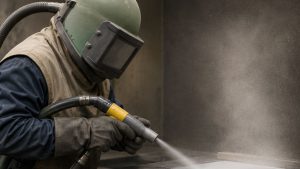
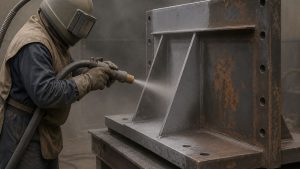
If you’re working with heavy-duty surfaces like rusted metal, concrete walls, or old paint-covered machinery, an industrial sand blaster isn’t just helpful, it’s essential. Industrial sand blasting, also called abrasive blast cleaning, is the gold standard for prepping surfaces in industries like construction, automotive, and manufacturing.
What separates top-tier abrasive blasting services from the rest comes down to the right techniques, equipment, and safety protocols. In this guide, we’ll break down everything you need to know to get clean, consistent results, make a request for services, and choose the best solution for your job site.
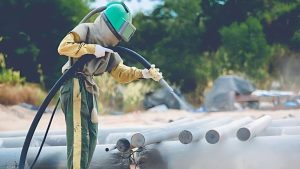
What Is Industrial Sand Blasting?
Industrial sand blasting is a surface preparation method that uses high-speed abrasive media, typically propelled through air-powered blast machines or blast pots, to clean or texture various surfaces. As a type of abrasive blasting, it effectively removes rust, paint, corrosion, scale, and old coatings from materials like metal, concrete, brick, and fiberglass. The process can be adjusted based on the material, finish requirements, and environmental factors, making it highly versatile across industries.
As a result, this process is essential for any project requiring a clean, smooth, or profiled surface. It ensures better adhesion for primers, coatings, or paint, ultimately improving both the durability and appearance of the final finish. Whether you’re preparing structural steel for coating, resurfacing concrete floors, or restoring old equipment, industrial sand blasting provides a reliable and efficient solution to achieve consistent, high-quality results.
Types of Abrasive Blasting Services
The right equipment and abrasive blasting service depend on the surface material, the working environment, and the desired final finish. Each method varies in aggressiveness, dust control, and suitability for different job conditions. Here are the most common types used across industries.
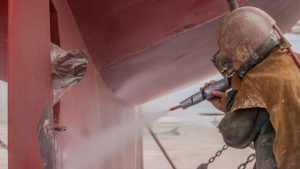
1. Dry Abrasive Blasting
Dry abrasive blasting is a widely used method for surface treatment on materials like steel, concrete, brick, and other durable surfaces. It can be performed using enclosed blast cabinets for controlled applications or open-air blast machines for more flexible use. This technique is especially effective for large-scale prep on industrial equipment, where removing rust, paint, or other coatings is essential before further treatment or finishing.
2. Wet Abrasive Blasting
Wet blasting, or wet abrasive blasting, combines water with abrasive materials to reduce airborne dust, making it a safer option for operators. This method is ideal for sensitive environments or indoor shop settings where dust control is a priority. While it’s commonly used for detailed or delicate surfaces, it can also support large-scale prep projects that require cleaner blasting conditions without compromising performance.
3. Vapor Blasting (Dustless Blasting)
Vapor blasting, also known as dustless blasting, is a lower-pressure method that uses water vapor combined with abrasive media. This approach is less aggressive on delicate surfaces like aluminum or fiberglass, making it ideal for restoration or fine-detail work. Although it’s gentler than other methods, vapor blasting can still be used effectively for large-scale prep tasks that require a balance of precision and surface cleanliness.
4. Specialty Blasting (Sponge, Soda, or Dry Ice)
Specialty blasting methods, such as sponge, soda, or dry ice blasting, use softer media to provide non-destructive cleaning on sensitive surfaces. These techniques are commonly used in restoration projects, historical preservation, or food-grade environments where superior quality and surface integrity are crucial. While they are gentler than traditional blasting, they can still be applied to large-scale prep jobs where precision and safety are top priorities.
Choosing the Right Sandblasting Equipment
The heart of effective blasting lies in using the right blasting equipment for the job. Selecting the correct system ensures consistent results, greater durability, and improved operator safety. From portable blast pots to enclosed blast cabinets, each setup serves a specific use case. Below is a quick breakdown of the most commonly used blasting equipment.
| Equipment Type | Use Case | Notes |
Blast Cabinets | Small parts, controlled shop environments | Also called sand blast cabinets |
Blast Pots | Portable site blasting, mid-size jobs | Must match the compressor and blast hose size |
Blast Machines | High-capacity jobs with direct pressure | Often stationary, with high power |
Dust Collectors | Control airborne contaminants | Important for operator safety |
Where It’s Used: Common Surfaces & Industries
Industrial sand blasting is widely used across many sectors, from prepping rusty truck frames to cleaning complex processing units. Common surfaces include steel beams, concrete walls and floors, brick masonry, and iron or aluminum machinery. These materials benefit from abrasive blasting’s ability to strip away corrosion, paint, or residue quickly and efficiently.
Industries that rely heavily on abrasive blasting services include construction, shipyards, automotive refinishing, aerospace, and large-scale manufacturing. Whether you’re operating in a fabrication shop or working on-site, using the correct equipment, air pressure, and blasting media is essential for optimal results and surface integrity.
Understanding Abrasive Blast Cabinets: Portable vs. Stationary Systems
Blast cabinets, also known as blasting cabinets or abrasive blast cabinets, come in a variety of sizes and configurations. They allow operators to work in a contained environment, protecting both the user and surrounding surfaces.
Portable cabinets are easy to move between job sites, making them ideal for contractors or technicians who need flexibility. They work best for light-to-medium coatings removal and can be a cost-effective solution for occasional or mobile blasting needs.
On the other hand, stationary cabinets are mounted in workshops to ensure consistent quality control. These are commonly used in batch production or repeat-use projects where precision and efficiency matter. Both portable and stationary cabinets can be fitted with custom systems to suit project size and media type. When thinking about a new sandblasting equipment purchase, consider how frequently you use it and what kinds of jobs you typically handle.
Operator Safety: More Than Just a Helmet
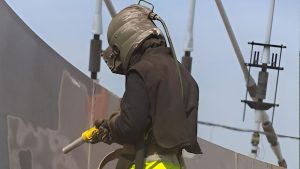
Proper operator safety gear is non-negotiable when sandblasting. Performing this task without personal protective equipment (PPE) can lead to serious injury due to flying debris, dust inhalation, or prolonged noise exposure. Sandblasting environments are harsh, and the risks are real, making protection a top priority on any job site.
Essential safety gear includes a respirator helmet with an air-fed system, a full-body blast suit, heavy-duty gloves, and reliable ear protection. Additionally, using a dust collection unit is highly recommended to control airborne particles and maintain compliance with OSHA guidelines. These measures not only protect the operator but also contribute to a safer and cleaner work environment.
Abrasive Blasting for Concrete Surfaces
Abrasive blasting concrete is a widely used method for preparing surfaces by creating the right texture for coatings or overlays. It’s also effective for removing construction residue, graffiti, old paint, or failed waterproofing. This technique is especially valuable in commercial and industrial projects where a clean, profiled surface is essential for long-lasting results.
To avoid damaging the concrete, it’s important to start by testing a small, inconspicuous area. Use lower PSI settings, with enough power, and choose media specifically designed for concrete surfaces, such as crushed glass or garnet, to achieve a clean finish without over-profiling. These precautions help maintain the structural integrity of the concrete while delivering a smooth, even surface ready for further treatment.
What Makes a Superior Quality Abrasive Blasting Service?
Our abrasive blasting equipment is built for reliability and performance. With custom systems designed specifically for your material and job scope, you can ensure efficiency across a variety of applications. Whether you’re removing paint from steel or prepping concrete, having equipment that fits your exact needs makes a difference.
Additionally, flexible equipment options, including both portable and stationary systems, allow you to work confidently on-site or in-shop. Real-time operator control ensures precise results, minimizing waste and increasing productivity. At the end of the day, a top-tier abrasive blasting service doesn’t just blast; it understands the matter, the surface, the goal, and the proper tools to get the job done right.
Conclusion
Whether you’re prepping concrete, removing rust, or restoring an old industrial part, industrial sand blasting remains the most reliable and effective way to clean and profile surfaces. From blast cabinets to portable blast machines, and abrasive blast cleaning to wet or vapor blasting, it all comes down to using the right equipment, the correct media, and ensuring a match with proper operator safety practices.
At CARV, we deliver superior quality sandblasting solutions tailored for commercial, automotive, and industrial needs. Contact us today to request a custom quote or explore which solution best matches your next project.
FAQs
What industry is sand blasting in?
Sandblasting is part of the surface preparation and finishing industry, commonly used in construction, manufacturing, automotive, and metalworking sectors.
What is the purpose of sandblasting?
The purpose of sandblasting is to clean, smooth, or roughen a surface by forcibly propelling abrasive material, typically to prepare metal, concrete, or wood for coating or repair.
What are the benefits of sandblasting?
The benefits of sandblasting include efficient removal of rust, paint, and contaminants, improved surface adhesion for coatings, and extended equipment lifespan through thorough cleaning.
What is the process of blasting?
The process of blasting involves using high-pressure air or water to project abrasive particles onto a surface, effectively stripping away unwanted material or preparing it for further treatment