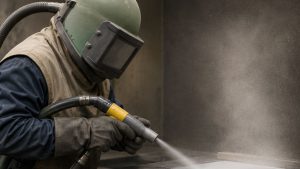
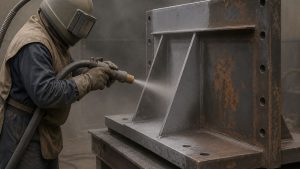
Sandblasting equipment is used to clean, shape, or prepare surfaces using high-pressure abrasive media. This type of abrasive blast equipment plays a key role in surface preparation across many industries, including sign manufacturing. It helps remove unwanted material and create textured or dimensional finishes with precision.
In sign production, sandblasting equipment supports consistent results, especially when working with wood and HDU. The right blasting equipment, combined with proper safety gear and setup, helps teams complete each job efficiently. Whether you are new to abrasive blasting or exploring better production methods, understanding how this equipment works helps you get the job done right.
What Is Sandblasting Equipment
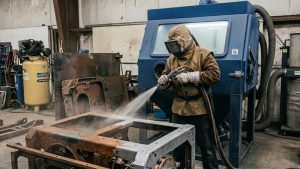
Sandblasting equipment refers to machines that use compressed air to push abrasives against a surface. This process, also known as abrasive blasting, removes layers of material to clean or shape the surface. It is widely used for cleaning, coating preparation, and creating dimensional designs.
This equipment includes several parts that work together, such as air compressors, hoses, nozzles, and abrasive media. Each component plays a role in how the system operates. When combined correctly, they deliver consistent results across different applications and projects.
Key Components of Sandblasting Equipment:
- An air compressor to generate pressure
- Blast pot to hold abrasive media
- Hoses and nozzles to direct blasting
- Abrasives such as glass beads, aluminum oxide, or other blasting media
- Dust collectors for air quality control
How Does Sandblasting Equipment Work
Sandblasting equipment works by forcing abrasive media through nozzles using compressed air. The high-speed impact removes surface material and prepares it for finishing. This process is commonly used for cleaning, shaping, and coating preparation.
Operators control pressure, media type, and nozzle movement to achieve the desired result. Adjustments depend on the material and the type of application. Skilled teams use their knowledge and experience to deliver consistent quality across projects.
What Equipment Is Needed for Sandblasting
To operate sandblasting equipment effectively, you need more than just a blasting unit. A complete setup includes several tools, supplies, and accessories that support performance and safety. Each piece of equipment helps ensure the job is completed efficiently and correctly.
Proper setup also improves productivity and reduces downtime. When all parts work together, teams can deliver better results while maintaining safety standards.
Essential Sandblasting Equipment
- Air compressor with sufficient PSI and CFM
- Blast pot or blasting system
- Abrasive media for different surfaces
- Nozzles in various sizes
- Dust collectors to manage debris
- Blast rooms or controlled workspaces
- Personal protective equipment (PPE)
Required Safety Gear
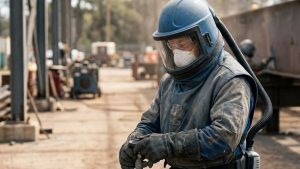
- Helmets with airflow systems
- Respirators for dust protection
- Protective suits and gloves
- Eye and face protection
How to Set Up Sandblasting Equipment
Setting up sandblasting equipment requires careful planning and proper assembly. A well-organized setup improves safety, performance, and overall efficiency. It also helps teams avoid common issues during operation.
Start by preparing the job site and ensuring proper ventilation. Blast rooms or enclosed spaces help control dust and improve safety conditions. Next, connect all components and test the airflow before starting the blasting process.
Step-by-Step Setup Guide
- Inspect all equipment and connections
- Load abrasives into the blast pot
- Connect the compressor, hoses, and nozzles
- Check dust collectors and airflow systems
- Wear complete PPE before the operation
- Test pressure and adjust settings
Types of Sandblasting Equipment
Different types of sandblasting equipment are designed for specific applications. Choosing the right system depends on the project size, material, and required finish. Each type offers different levels of control, power, and efficiency.
Professional teams often use pressure blasting systems for consistent results. Smaller setups may use siphon systems, while larger operations rely on blast rooms for high-volume work.
Common Types of Blasting Equipment:
- Pressure blasting systems for heavy-duty work
- Siphon systems for lighter applications
- Blast cabinets for controlled environments
- Blast rooms for large-scale projects
Sandblasting vs CNC Routing
Sandblasting and CNC routing are both used in surface shaping, but they produce different results. Sandblasting creates textured surfaces, while CNC routing provides sharp and precise cuts. Each method has its own strengths depending on the application.
Many manufacturers combine both methods to achieve the best results. This approach improves flexibility and allows teams to handle a wider range of projects.
Comparison Table:
| Method | Strength | Best Use | Result |
| Sandblasting | Texture and depth | Wood surfaces | Natural, dimensional finish |
| CNC Routing | Precision cutting | HDU materials | Clean and sharp detail |
Applications of Sandblasting Equipment
Sandblasting equipment is used across many industries for cleaning, preparation, and finishing. It is commonly used in construction, manufacturing, and signage projects. The process supports consistent results and improves surface quality.
Contractors and manufacturers rely on sandblasting to complete projects efficiently. With the right equipment and supplies, teams can handle different types of jobs with confidence.
Common Applications:
- Surface preparation for coatings
- Rust and paint removal
- Signage and carving projects
- Industrial cleaning
- Restoration work
Can You Rent Sandblasting Equipment?
Yes, many suppliers offer sandblasting equipment for rent. Renting is a practical option for contractors or teams that handle occasional projects. It allows you to complete a job without making a large investment.
However, renting may not always meet long-term needs. Frequent use may require purchasing equipment to improve productivity and reduce costs over time. Understanding your workload helps you decide the best option.
Renting vs Buying:
| Option | Advantage | Limitation |
| Rent | Lower upfront cost | Limited availability |
| Purchase | Long-term value | Higher initial investment |
Production Considerations for Sandblasting
Operating sandblasting equipment requires planning, experience, and the right environment. Teams must consider airflow, workspace setup, and material selection. Blast rooms and dust collectors help maintain control and improve safety.
A knowledgeable team plays a key role in achieving consistent results. With proper training and support, operators can handle different applications and deliver high-quality work.
Key Factors for Success:
- Reliable equipment and accessories: High-quality sandblasting equipment and accessories help maintain consistent airflow and pressure. This reduces downtime and supports smooth operation across different projects.
- Proper PPE and safety standards: Using the right personal protective equipment protects operators from dust and debris. Following safety standards helps reduce risks and keeps the job site safe.
- Consistent abrasive media quality: Uniform abrasive media ensures even surface removal and predictable results. Inconsistent media can lead to uneven finishes and lower overall quality.
- Skilled operators with experience: Experienced operators understand how to adjust pressure, distance, and technique. Their knowledge helps deliver accurate results and improve efficiency on every job.
Limitations of Sandblasting Equipment
Sandblasting equipment is effective, but it has limitations. It may not produce the same level of precision as other methods like CNC routing. Fine details and small parts can be challenging to achieve with blasting alone.
The process also requires proper setup and maintenance. Without the right equipment and support, results may vary. This is why many manufacturers focus on controlled systems and experienced teams.
Safety and Best Practices
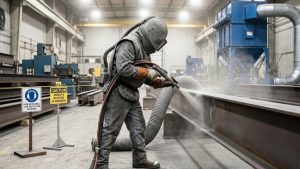
Safety is an essential part of working with sandblasting equipment. Proper PPE protects workers from dust, debris, and harmful particles. Helmets, respirators, and protective suits are standard safety gear used in blasting operations.
Teams should also follow best practices to maintain safe working conditions. Regular equipment checks and proper handling of abrasives help prevent accidents. A strong commitment to safety supports long-term success and builds trust with customers.
Conclusion
Sandblasting equipment plays a key role in surface preparation, shaping, and finishing across many industries. When used correctly, it helps teams deliver consistent quality, improve productivity, and complete each job with precision. From understanding how sandblasting equipment works to choosing the right setup and safety gear, every step affects the final result. With the right approach, businesses can improve efficiency, reduce errors, and produce reliable outcomes that meet customer expectations.
At CARV, our team understands what it takes to deliver consistent, high-quality signage without the complexity of managing your own sandblasting equipment. We support sign companies with dependable production, reliable results, and a strong commitment to quality on every project. If you have questions or want to explore how we can support your next job, contact us today and see how we can help you get the job done right.
FAQs
What is the difference between sandblasting and abrasive blasting?
Sandblasting is a type of abrasive blasting that uses sand or similar media. Abrasive blasting is a broader term that includes many materials like glass beads or aluminum oxide. Both processes use high-pressure air to clean or shape surfaces.
What type of abrasive media should I use for my project?
The right media depends on the material and the desired finish. Softer abrasives work well for delicate surfaces, while harder abrasives are better for heavy surface preparation. Choosing the correct media helps improve results and prevent damage.
How much air pressure is needed for sandblasting equipment?
Most systems operate between 60–120 PSI, depending on airflow (CFM) and application. Larger projects or tougher materials may need higher pressure and airflow. Matching PSI and CFM to your equipment helps maintain consistent performance.
How do you maintain sandblasting equipment?
Regular maintenance includes checking hoses, nozzles, and connections for wear or damage. Cleaning the system and monitoring dust collectors helps keep equipment running efficiently. Proper maintenance extends equipment life and supports consistent results.