Last updated: June 10, 2026
Yes, sandblasting can remove paint from wood when the correct blasting media and pressure settings are used. Soda blasting, crushed walnut shells, and corn cob media are often the safest options for wood surfaces. However, aggressive media or high pressure can damage softwood, furniture, trim, and detailed woodwork.
Sandblasting paint off wood is one of the most efficient ways to strip stubborn layers from decks, fences, siding, beams, and even antique furniture. It’s especially useful when dealing with detailed or uneven surfaces that are tough to reach with hand sanding or power tools. When done properly, sandblasting saves hours of labor and creates a clean surface ready for refinishing.
But there are still risks to consider. Sandblasting uses high-pressure abrasive media that, if used carelessly, can gouge softwood, splinter edges, or leave deep etching behind. That’s why choosing the right blasting material, like crushed walnut shells or soda, is just as important as the technique itself. In this article, we’ll break down how the paint removal process of sandblasting works, safety best practices, the tools you’ll need, and when it’s the best method for removing paint from wood.
Can You Sandblast Paint Off Wood?
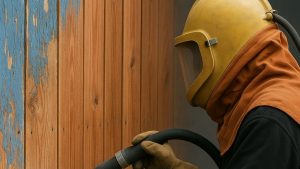
Yes, you can sandblast paint off wood, but the process must be controlled. The safest results usually come from low pressure, soft abrasive media, and steady nozzle movement. Sandblasting works best on exterior wood, beams, fences, decks, and thick painted surfaces. It may not be the best option for softwood, thin trim, antiques, or detailed furniture unless handled by a professional.
A test patch helps prevent damage before the full project begins. Professionals usually start with low pressure, choose a softer blasting media, and adjust the nozzle distance based on the wood species and paint thickness.
How Sandblasting Works
Sandblasting relies on a high-pressure stream of abrasive material that strips paint and surface coatings while lightly etching the wood. It works well for bare wood, raw wood, and old or uneven surfaces that can’t be sanded easily by hand. Professionals often use softer abrasives like soda, corn cob, or crushed walnut shells to avoid damaging the wood.
At CARV, wood sandblasting starts with the surface condition, paint thickness, and wood type. Softer media, such as soda, corn cob, or crushed walnut shells, often works best for wood because it removes paint without stripping away too much of the surface.
For heavier exterior projects, the setup may need more pressure or a different media. That decision should always come after testing a small area first.
Basic sandblasting setup includes:
| Tool | Purpose |
| Sand blaster for paint removal | Main unit that delivers abrasive media |
| Air compressor | Provides the air pressure to power the system |
| Hose & nozzle | Directs the blasting stream |
| Abrasive media | Material used to remove paint (e.g., soda, walnut shells) |
| Protective gear | For safety, include a respirator, goggles, and gloves |
When Should You Sandblast Wood?
Sandblasting wood is best when the surface has thick paint, old coatings, rough texture, or hard-to-reach details. It can work well on exterior siding, fences, decks, beams, log cabins, and large restoration projects where hand sanding would take too much time.
It is usually not the best first choice for thin trim, delicate furniture, softwood, or small indoor pieces. These surfaces can be damaged more easily, especially if the pressure is too high or the blasting media is too aggressive.
Safety Considerations
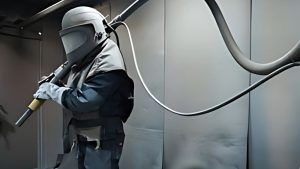
Sandblasting may seem straightforward, but it comes with serious safety risks if not handled properly. To start, always wear the right protective clothing and gear, especially when using sandblasting equipment. This includes a respirator to prevent inhaling dust and paint particles, goggles or a full face shield for eye protection, and gloves, coveralls, and ear protection for full-body safety. Without this equipment, you’re exposing yourself to harmful debris and airborne contaminants that can cause long-term health issues.
In addition, be mindful of your environment. If you’re working outdoors, pick a calm day with minimal wind to prevent debris from spreading. For indoor projects, make sure you’re using proper dust extraction systems. It’s also important to keep bystanders, pets, and flammable materials far from the blasting area. Finally, never skip the test patch; this step ensures your chosen media and pressure settings won’t damage the wood. These precautions make the process safer and more controlled.
Can You Sandblast Lead Paint?
Sandblasting lead paint is not recommended unless the surface has been tested and the work is handled with proper containment and safety controls. Blasting can turn lead paint into airborne dust, which creates serious health and environmental risks.
If the wood may contain lead-based paint, test it before starting. Older homes, signs, furniture, and exterior wood surfaces may need certified lead-safe removal methods instead of standard sandblasting.
Best Blasting Media for Paint Removal on Wood
Choosing the right blasting media matters because wood reacts differently than metal or concrete. Soft media, such as crushed walnut shells, soda, and corn cob grit, can remove paint while protecting the wood grain. More aggressive media may work on hardwood or exterior structures, but it can damage softer surfaces if used incorrectly.
| Blasting Media | Best For | Notes |
|---|---|---|
| Crushed walnut shells | Furniture, softwood, detailed surfaces | Gentle and eco-friendly |
| Soda | Antiques, trim, indoor projects | Very mild and non-toxic |
| Corn cob grit | Restoration work | Soft and controlled |
| Glass bead | Hardwoods and outdoor structures | More aggressive |
| Sand or silica | Not recommended for most wood | High damage and safety risk |
Spotlight: Soda Blasting
Soda blasting is widely considered one of the safest methods for removing paint from wood surfaces. It uses sodium bicarbonate (baking soda) as the abrasive, which is much gentler than traditional blasting media. This makes it ideal for preserving the wood grain and avoiding splintering or surface damage. In addition to being non-destructive, soda blasting is also biodegradable and non-toxic, making it an eco-friendly option. It’s especially effective on furniture, trims, and indoor surfaces where a softer touch is needed.
Soda blasting is often a good choice for delicate wood surfaces. For example, it can work well for indoor projects where dust control and surface preservation are critical. It’s also highly recommended when removing paint from antiques, softwoods, or intricately detailed trim. While soda isn’t reusable, making it slightly more expensive, the added safety and clean results often outweigh the cost, especially for delicate or high-value projects.
Tips for Sandblasting Paint Off Wood
If you want to sandblast wood correctly the first time, following a few key best practices can save you from costly mistakes. Always start with low pressure and adjust gradually based on the wood’s hardness. Selecting a soft abrasive is crucial, especially when working with softwoods like pine, to prevent etching or splintering. Be sure to keep the nozzle moving at all times and work in smooth, overlapping strokes to ensure an even finish. After blasting, use a brush or air compressor to thoroughly clear away dust and debris before moving on to refinishing.
There are also a few common mistakes to avoid. For instance, never use construction-grade sand, as it’s far too aggressive and can damage the surface. Blasting damp or wet wood is another big no; it can cause the material to splinter or trap moisture. Skipping protective gear exposes you to harmful dust and particles, while neglecting cleanup can interfere with how well new paint or stain adheres. Taking these precautions helps ensure a clean, smooth finish and a safer blasting experience.
Sandblasting vs. Sanding for Paint Removal
Sandblasting is usually faster than sanding when removing paint from rough, uneven, or detailed wood surfaces. It can reach grooves, corners, and textured areas that sanding tools may miss.
Sanding is often better for flat, delicate, or small wood surfaces because it gives more control. However, it can take longer when the paint is thick or layered.
| Factor | Sandblasting | Sanding |
|---|---|---|
| Speed | Faster for large or uneven surfaces | Slower for thick paint |
| Best use | Fences, beams, siding, decks | Flat boards, trim, small projects |
| Detail work | Good for grooves and corners | Harder to reach details |
| Damage risk | Higher if pressure is wrong | Lower with proper grit |
| Finish control | Moderate | High |
| Labor required | Lower | Higher |
Blasting Wood Furniture
Blasting wood furniture can be a game-changer for restoring old pieces, making it a rewarding job with multiple layers of paint or finish. Unlike sanding, which can be time-consuming and inconsistent on curved or detailed surfaces, sandblasting reaches into grooves and corners with ease. It’s particularly useful for reclaiming antique furniture or reviving vintage items where precision matters.
To get the best results, start by choosing the right media; crushed walnut shells or baking soda are gentle enough for furniture. Keep the nozzle 8–12 inches from the surface and always use low pressure. More importantly, keep the nozzle moving to avoid gouging or uneven wear. After blasting, don’t forget to wipe the surface clean with a soft cloth or use compressed air to remove any residual dust before refinishing.
Alternatives to Sandblasting
If sandblasting feels too aggressive or costly for your project, consider these other paint removal methods:
| Method | Pros | Cons |
| Heat Gun + Scraper | Good for large areas, low cost | Messy, slower in the detailed areas |
| Chemical Strippers | Less labor-intensive | Can be toxic, requires cleanup |
| Hand Sanding | Safe for small projects | Time-consuming, not good for thick paint |
| Power Sanding | Fast for flat areas | Can miss grooves or details |
Conclusion
Sandblasting paint off wood can save time and create a clean surface for refinishing when the right media, pressure, and safety steps are used. It works especially well on exterior wood, beams, fences, decks, and heavily painted surfaces. However, delicate wood, softwood, antiques, and lead-painted surfaces need extra care.
CARV provides professional sandblasting for wood, metal, and specialty surfaces. Contact us today to discuss your project and request a quote.
FAQs
Can you use a sand blaster on wood?
Yes, you can use a sand blaster on wood, but it must be done with care. Using too much pressure or the wrong abrasive can damage the wood surface during a paint job. For best results, choose a soft blasting media and test on a small area first.
Can you strip wood with a sandblaster?
Yes, you can strip wood with a sandblaster by using compressed air and abrasive media to remove layers of paint or finish. It works well on rough, weathered, or heavily painted wood. However, improper technique can lead to etching or splintering.
What is the best blasting media for wood?
The best media blasting options for wood include crushed walnut shells, baking soda (soda blasting), and corn cob grit. These materials are soft enough to remove paint without damaging the wood grain. Your choice will depend on the condition of the wood and the type of paint being removed.
Should I wear a mask when sandblasting?
Yes, you should wear a mask when sandblasting to protect your lungs from harmful dust and particles. A proper respirator is highly recommended, especially when working indoors or with lead-based paint. Safety goggles, gloves, and hearing protection are also essential.