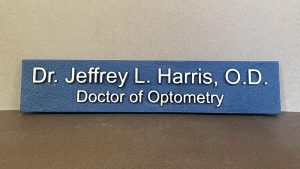
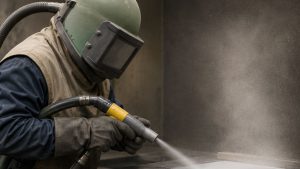
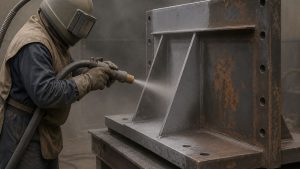
Carving letters in wood signs turns a plain board into a dimensional sign that adds depth, texture, and lasting impact. For professional sign companies, carved signage offers a premium upgrade over flat prints, ideal for upscale residential, hospitality, and retail environments where visual presence matters.
Whether you’re carving in-house or partnering with a wholesale provider, a tip is to understand the tools, materials, and techniques involved to help you deliver more value to your clients. From choosing between HDU and cedar to deciding when to route or hand-carve, this article covers the essentials for creating high-quality carved signs that meet today’s design and durability standards.

Why Many Shops Still Offer Hand-Carved or Routed Signs
Despite advances in CNC and UV printing, carved wood signs remain a popular choice for clients seeking a more tactile, timeless look. For example, they’re especially favored by high-end residential builders, boutique storefronts, historic properties, neighborhood developments, and hospitality brands that value craftsmanship and visual impact.
These dimensional signs, whether hand-carved or routed, offer lasting appeal. They age gracefully, photograph well for marketing use, and help elevate a brand’s perceived quality in ways that flat prints simply can’t match.
Tools and Materials for Letter Carving
You don’t need a full cabinetmaking shop to carve letters, but you do need the right basics.
Core Tools for Letter Carving:
- Chip carving knife – good for small HDU or softwood detailing
- ¾” bevel-edge chisel – best for straight lines and wider letters
- Gouges (#6, #7, #8) – help navigate tight curves and round strokes
- Mill knife – useful for large, deep V-cut letters
- Sharpening strop or stone – keeps your cuts clean and tools efficient
Support Tools:
- T-square and ruler – ensure your baselines and centerlines are exact
- Mechanical pencil or ink pen – for layout work
- Carbon paper or graphite sheets – to transfer digital lettering to substrate
- Spray adhesive – temporarily attaches printed layouts to your board
- Scrap boards – for test cuts and practice
Fonts That Work Best for Carved Signs
Some fonts that look great in print don’t always work well when carved, so you should be careful to choose the right ones. Tight spacing, delicate details, or overly decorative elements can chip, distort, or become unreadable during hand carving or routing, especially on dimensional surfaces.
To ensure clean results, stick with carver-friendly fonts like Roman-style typefaces, Palatino, Garamond, Helvetica, and stencil fonts. These offer strong legibility and simple forms that hold up well under tools. Most sign shops use Adobe Illustrator to design, scale, and space lettering accurately before transferring it to the substrate.
How to Transfer Lettering to the Surface
Whether you’re carving cedar or HDU, an accurate layout is essential to achieving a clean, professional finish. Poor alignment or inconsistent spacing can throw off the entire look of a sign, especially with serif fonts or when working at large scales.
Three Methods:
- Carbon paper transfer
Place a sheet of carbon paper between your printed design and the board. Use a pencil or stylus to trace each letter, ensuring even pressure to leave a clear outline. This method works well for both cedar and HDU, especially when using darker inks or markers afterward to enhance visibility. - Spray-and-stick template
Apply a light, repositionable spray adhesive to the back of your printout and attach it directly to the board. This allows you to carve directly through the paper. It’s a fast, precise option that’s especially useful for intricate designs or when batch-producing signs. - Manual layout
For experienced sign makers, hand-drawing the design using a mechanical pencil, T-square, and centerlines allows for full control of spacing, scale, and alignment. This method is ideal for custom one-offs, layout adjustments on the fly, or stylized typography where the digital template doesn’t quite fit the surface.
Carving Process: Basics That Matter
After transferring your layout, you can start carving. Here’s a simplified breakdown for both hand tools and routing.
For Hand Tools:
- Start with straight lines — letters like I, L, E, and T build control
- Add curved letters — C, O, G, and S require small gouges for tight curves
- Use a 60–65° angle — V-cut depth and consistency improve with steady blade angles
- Carve shallow first — then deepen as needed; shallow cuts reduce chip-out
- Sharpen often — dull tools can leave fuzzy or torn edges
For Router Use:
- Use router bits designed for signmaking
- Always test settings on scrap HDU or cedar boards
- Rout multiple passes if depth is needed, rather than forcing one deep cut
Best Substrates for Carved Signs
At CARV, we specialize in two sign carving substrates:
Dimensional Cedar
Dimensional cedar is a durable, rot-resistant material that performs exceptionally well in outdoor environments. Its natural texture makes it ideal for rustic or organic signage, often preferred in residential, cabin, or nature-based settings. With a little practice, when carved with sharp tools, cedar holds fine details cleanly and consistently. It also accepts stain and paint evenly, making it a versatile choice for both natural and color-finished signs. For sign shops creating outdoor wayfinding or decorative signage with a handcrafted feel, cedar remains a go-to option.
High-Density Urethane (HDU)
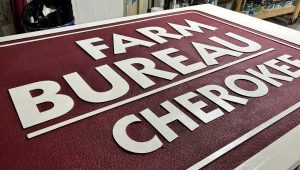
High-Density Urethane (HDU) is a lightweight, stable material that won’t crack, warp, or split, making it ideal for dimensional signage. It routs easily, holds sharp details, and is especially well-suited for painted finishes and raised or recessed logo work. HDU is commonly used for branded commercial signs, monument signage, and sandblasted backgrounds where consistency and durability are key. At CARV, we focus exclusively on dimensional carved cedar and HDU, and we encourage clients to comment on any materials they may want us to consider, though we do not work with metal, plastic, or laser-cut materials.
Sign Ideas You Can Offer With Carved Lettering
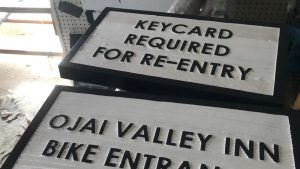
You can post updates on how carved cedar and HDU are versatile substrates that allow sign companies to deliver premium, long-lasting signage across a range of applications. They’re commonly used for main ID signs at boutique businesses, HOA entrances, and community monument signs where visual impact and durability matter.
Additionally, these materials are ideal for campground or cabin directional signage, coastal town signs with sandblasted textures, and property name signs for resorts or vacation homes. For commercial clients, office park signage featuring dimensional logos and carved lettering helps create a polished, professional impression that lasts.
Finishing Techniques for Better Results
Whether you’re prepping the surface or sealing the finished piece, good finishing adds years of life to a carved sign.
Quick Finishing Checklist:
- Use a belt sander to smooth the board after carving
- Apply sanding sealer before paint or stain
- Use spray paint to fill in letters or background fields
- Finish with clear coat or marine-grade sealant if outdoors
- Always mask edges cleanly and sand gently after painting to reveal raised surfaces
When to Hand Carve, Rout, or Outsource
Choosing between hand carving, routing, or outsourcing depends on your shop’s capabilities, project volume, and desired finish. Each method has its strengths, and understanding when to use which can save time, reduce waste, and improve overall quality. Some sign shops carve in-house with a plunge router and belt sander. Others prefer to send artwork and dimensions to a trade partner like CARV, then paint and install the finished signs themselves.
| Method | Best For | Pros | Cons |
| Hand carving | Small-batch or signature pieces | Heirloom look, deep cut quality | Time-intensive |
| Routing | Mid-volume production or basic shapes | Speed, consistency, repeatability | Requires good setup and control |
| Wholesale (CARV) | Shops without carving capacity | Clean, accurate, ready-to-finish signs | No tooling or labor investment |
Conclusion
Carved lettering allows sign companies to offer a premium product that feels both substantial and timeless. Whether you carve in-house or outsource the production, dimensional signs made from quality materials like cedar or HDU can elevate your shop’s offerings and deliver long-term value to your clients. These signs are ideal for a wide range of applications, from boutique storefronts and neighborhood entrances to resorts and office parks, helping you meet client demands for signage that stands out and lasts.
At CARV, we work exclusively with sign professionals to produce wholesale carved signage using premium HDU and dimensional cedar. Our signs are handcrafted, precisely routed, and finish-ready, with clean edges and consistent depth. We support your workflow by handling the most labor-intensive part of the process, allowing your team to focus on painting, branding, and final installation. Whether you need a single sign or a full batch for a development, you can count on fast turnaround, accurate detail, and responsive support. Contact us to request a quote or upload your artwork to get started on your next custom sign project.
FAQs
What is the best way to carve letters into wood?
The best way to carve letters into wood is to use sharp hand tools like a chip carving knife or bevel-edge chisel, or a plunge router with the appropriate bit. The method depends on the project size and level of detail needed. For most sign shops, routing provides speed and consistency, while hand carving offers a more traditional, handcrafted finish.
What router bits are best for sign making?
The best router bits for sign making are V-groove bits, round-nose bits, and straight-cut bits designed for lettering. V-groove bits are especially useful for clean, sharp lines in both HDU and cedar. Always test your settings and depth on scrap material before carving the final sign.
What font is used for wood carving letters?
The font most commonly used for wood carving letters is a Roman-style serif font, such as Palatino or Garamond. These fonts hold detail well and maintain legibility when carved. Helvetica and stencil fonts also work well for routed signs due to their bold, simple shapes.
Can I use spray paint on carved signs?
Yes, you can use spray paint on carved signs to fill in letters or background areas. It’s especially effective on HDU and cedar when followed by light sanding to clean up edges. Make sure to apply masking and use even coats to avoid bleed.